an Amsterdam based architecture studio
Niemeyer
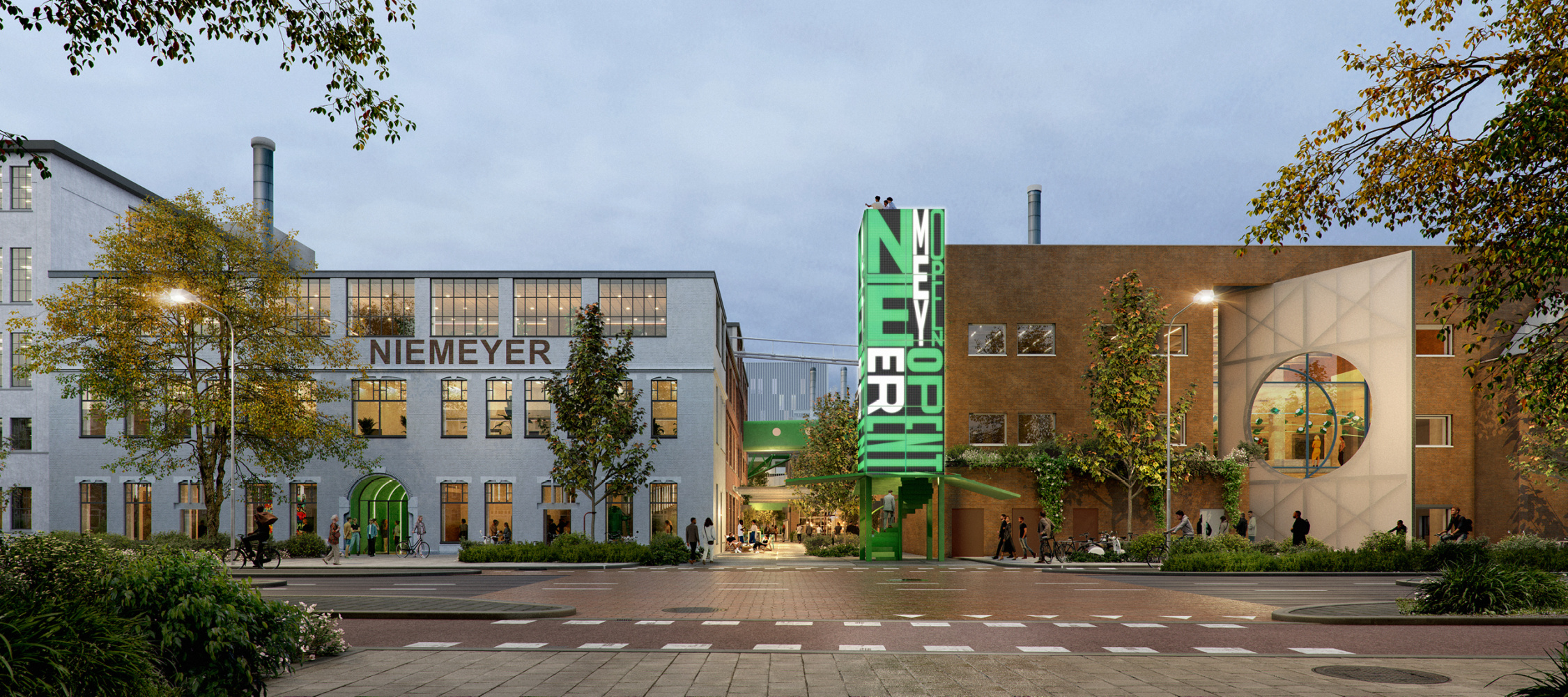
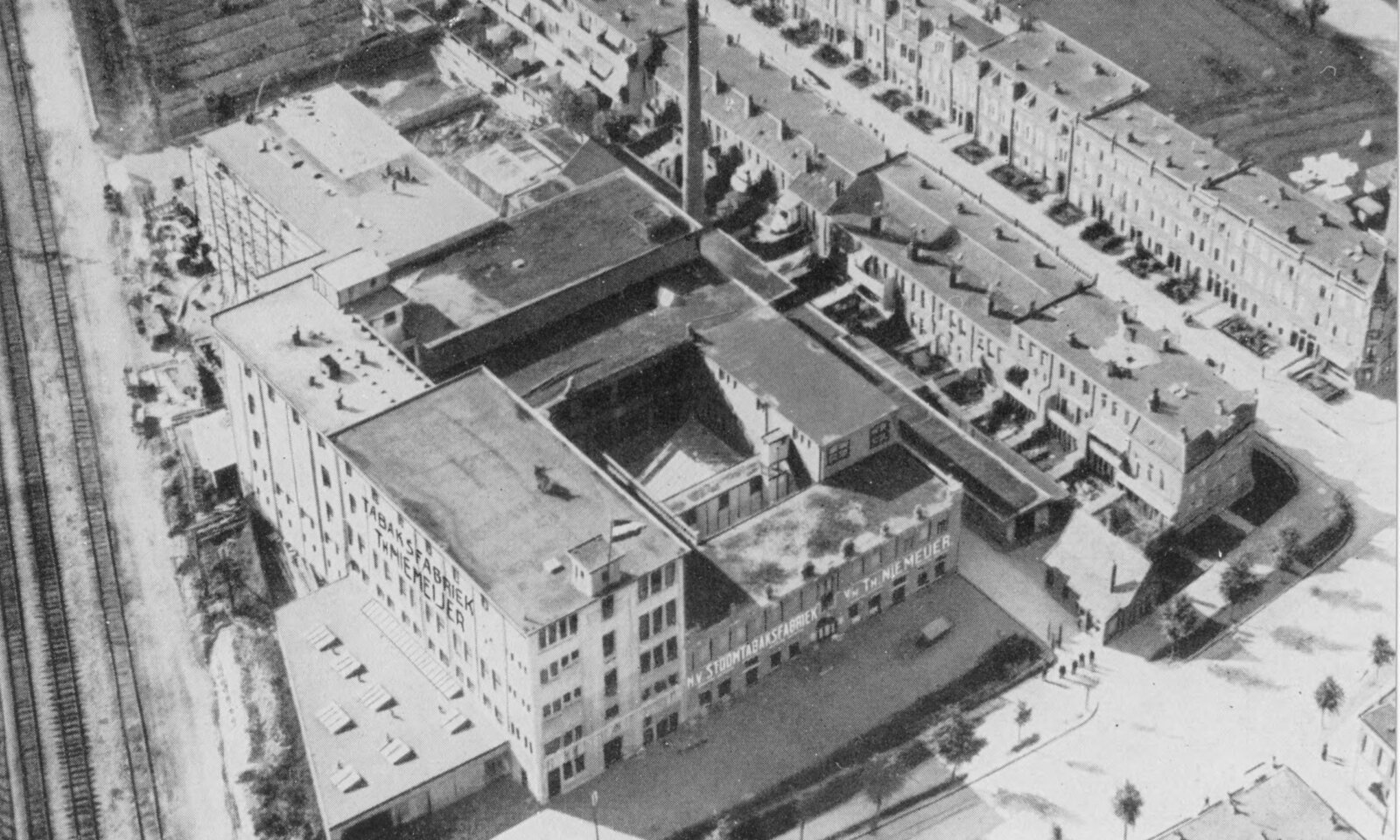
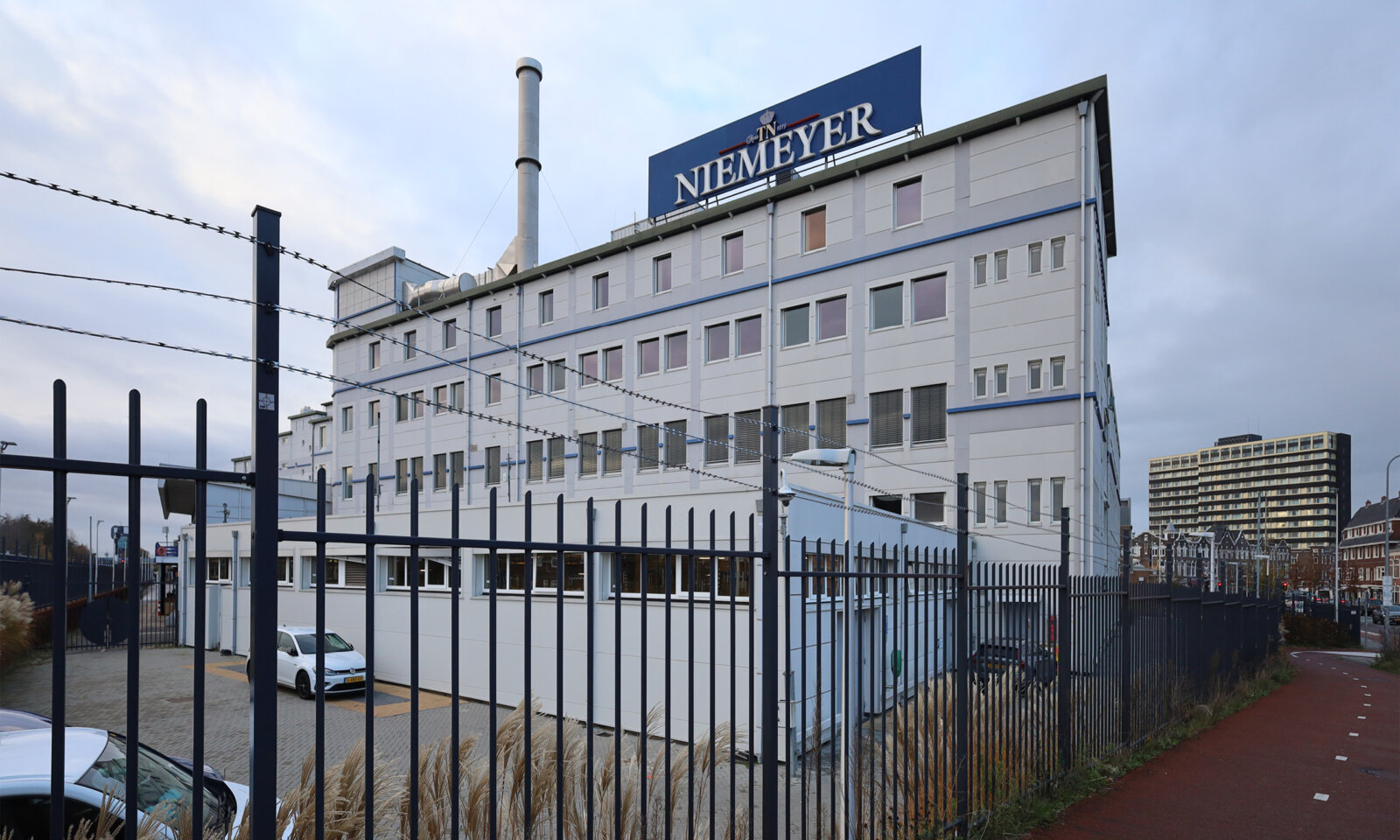
On a former factory site in Groningen, tobacco was processed behind brick walls and locked gates for over two centuries. Now, for the first time, this hidden industrial world will open up as ‘Niemeyer’ — a bold new public place in the heart of the city. By opening up the 40,000 m² complex, we’re transforming a sealed industrial relic into a connected urban district, designed for innovation, culture and encounter.
Project details
Client
MWPOType
Urban transformation, architecture, interior; 38.000m2Location
Paterswoldseweg, Groningen, NLDesign-Completion
2023-ongoingPartners
Team Niemeyer: Campus Groningen (programme), Municipality of Groningen, Studioninedots (urban transformation, architecture, Shared Facilities interior i.c.w. Ronald Hooft & Suzanna Weeda), Felixx (landscape architect), BERNS architectuur (heritage advisor), abtWassenaar (engineering, building physics), Geveke (contractor), Nijeboer-Hage (installations)Design team
Vincent van der Klei, Metin van Zijl, Albert Herder, Jurjen van der Horst, Karlijn de Jong, Dennis Roest, Gosia Machaj, Paulina Kurowska, Ania Bozek, Eva Souren, Nina Kwakkernaat, Stefanie Krietemeijer, Bas van Lenteren, Mohammed Tarek, Britt SegerenImage credits
Absent Matter, SURREND3R, Studioninedots, Groninger Archieven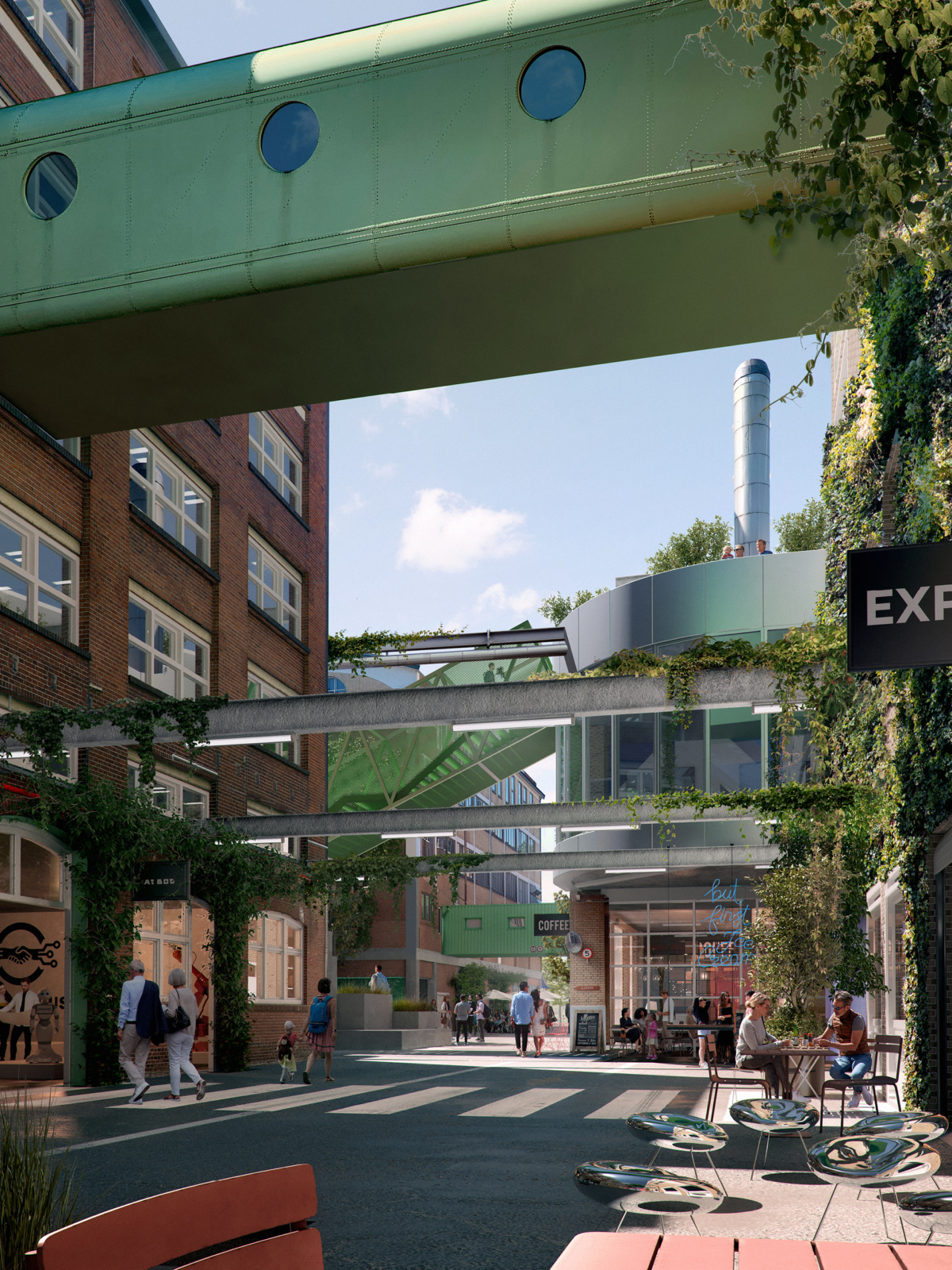
Closed off for 200 years — now a place for everyone.
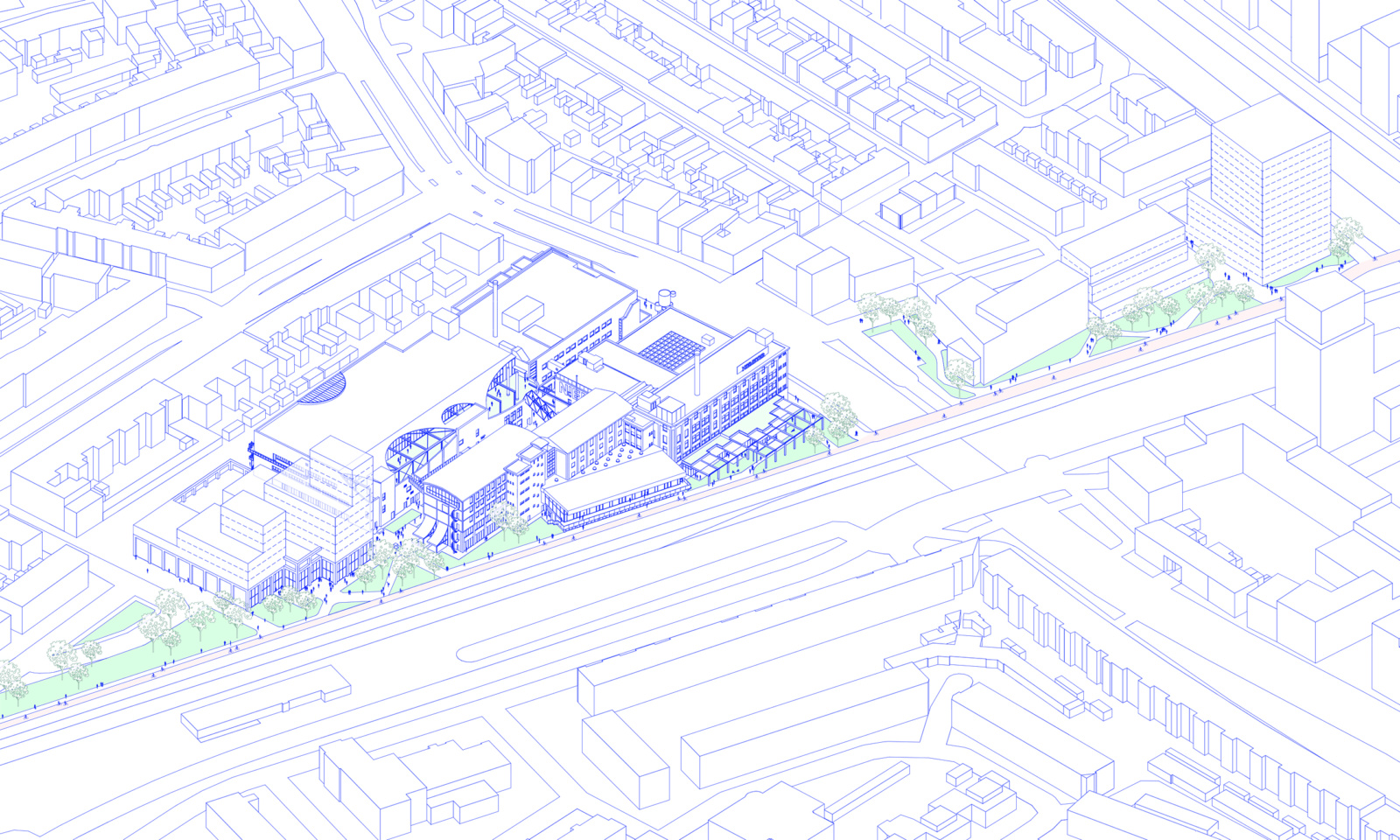
Niemeyer will bring together new ventures for digital innovation, cultural venues, hospitality, education and manufacturing — all set within the original factory buildings. Public functions such as cafés, galleries and workshops are housed both in the renovated interiors and in newly designed spaces, that connect seamlessly with streets and parks. Located near the station and city centre, the site becomes part of the city’s everyday flow, welcoming to both locals and visitors.
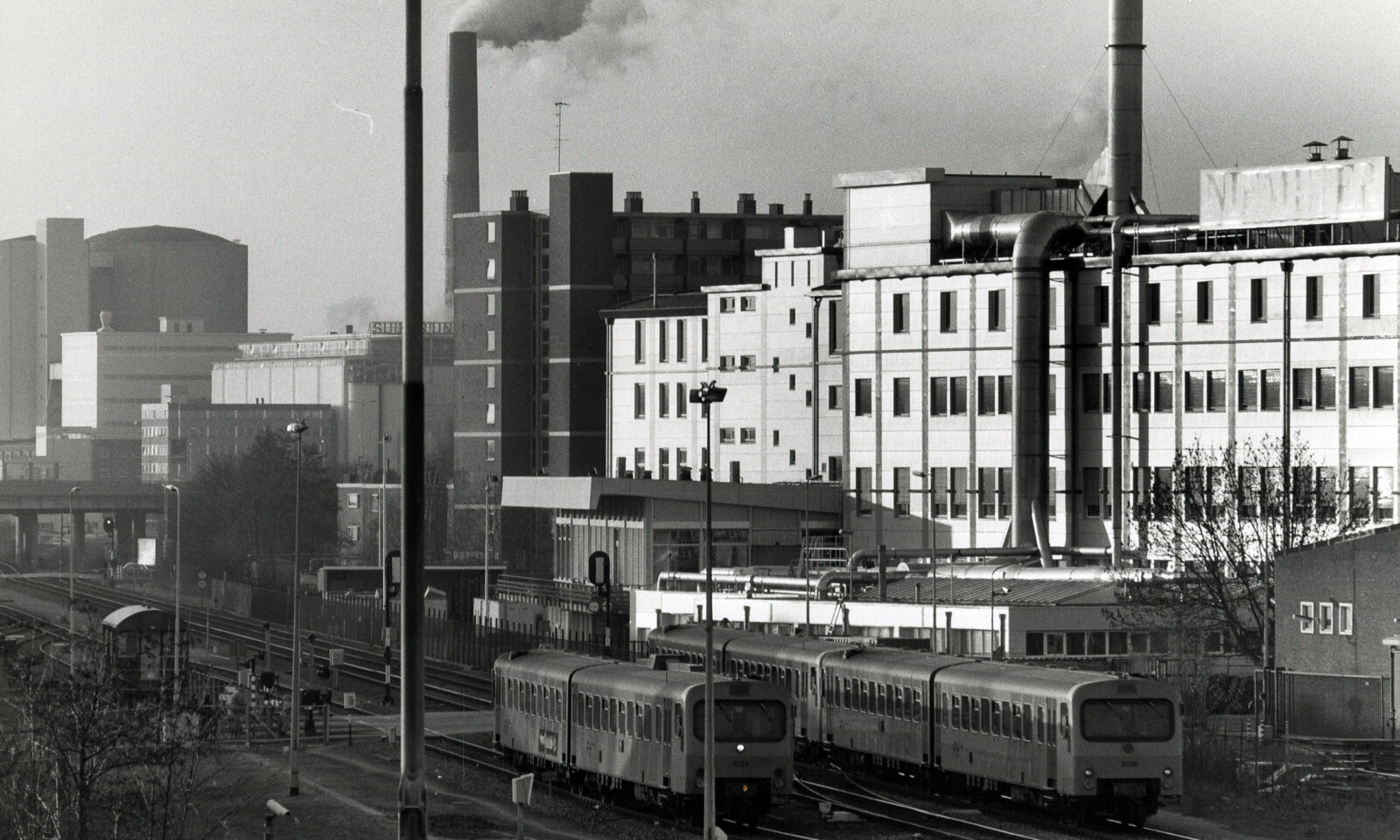
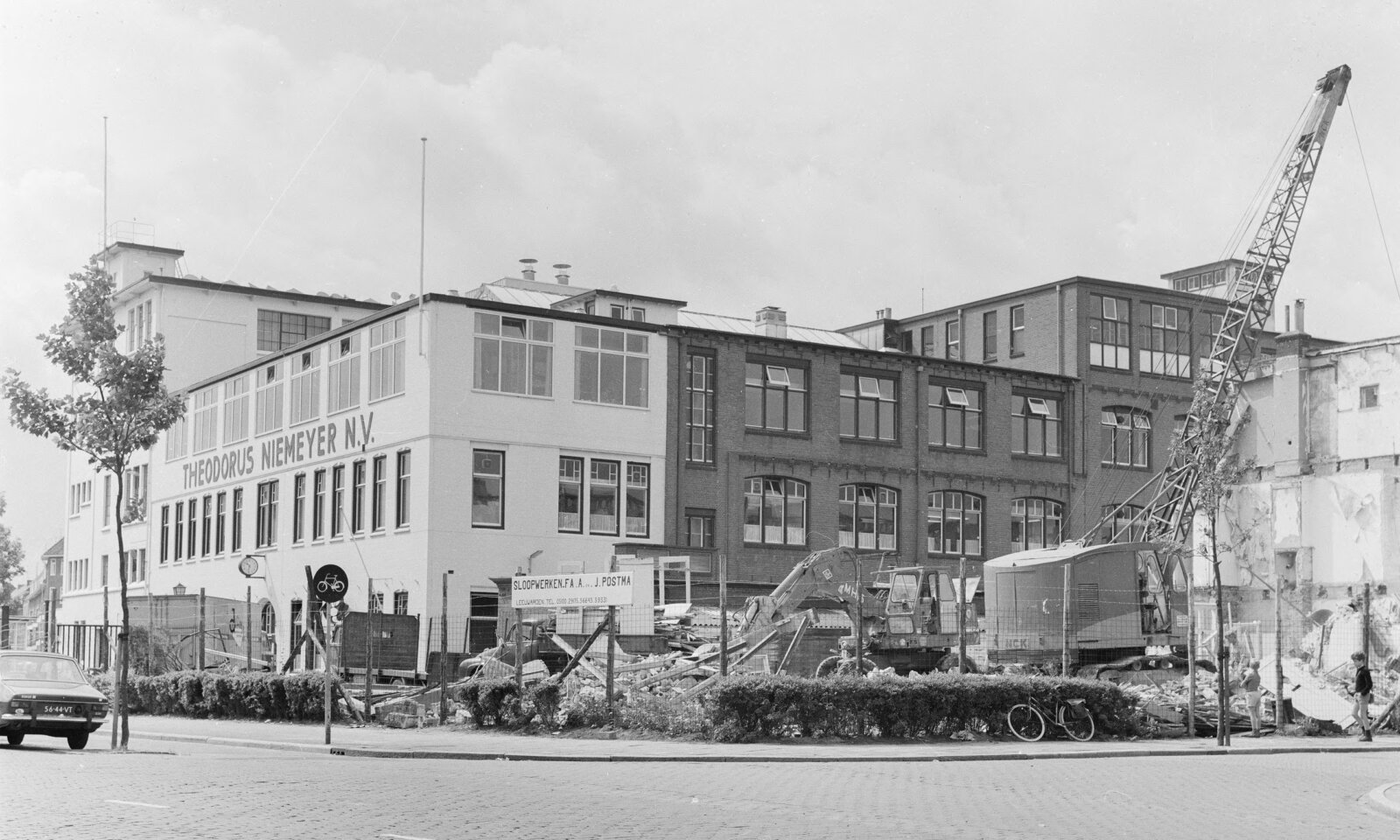
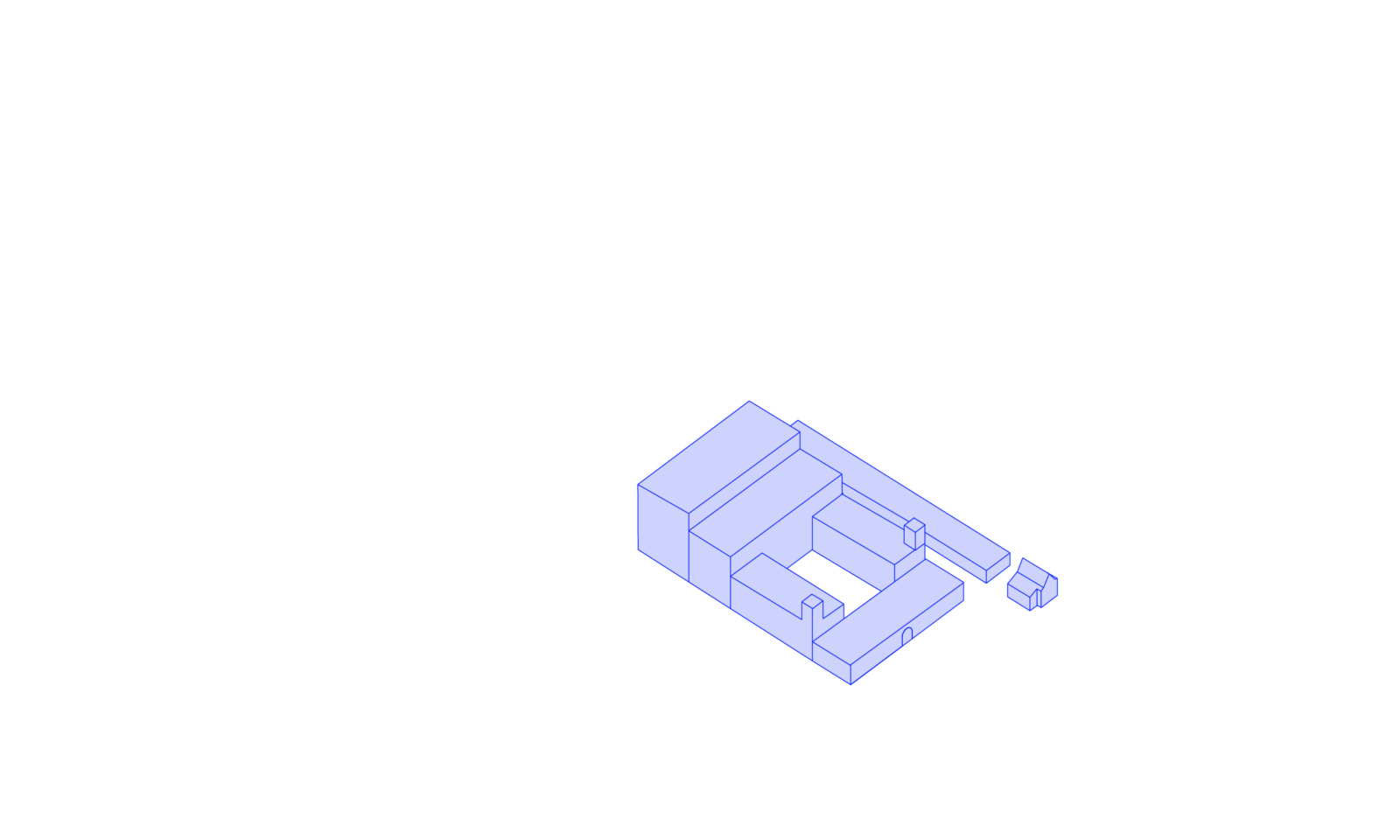
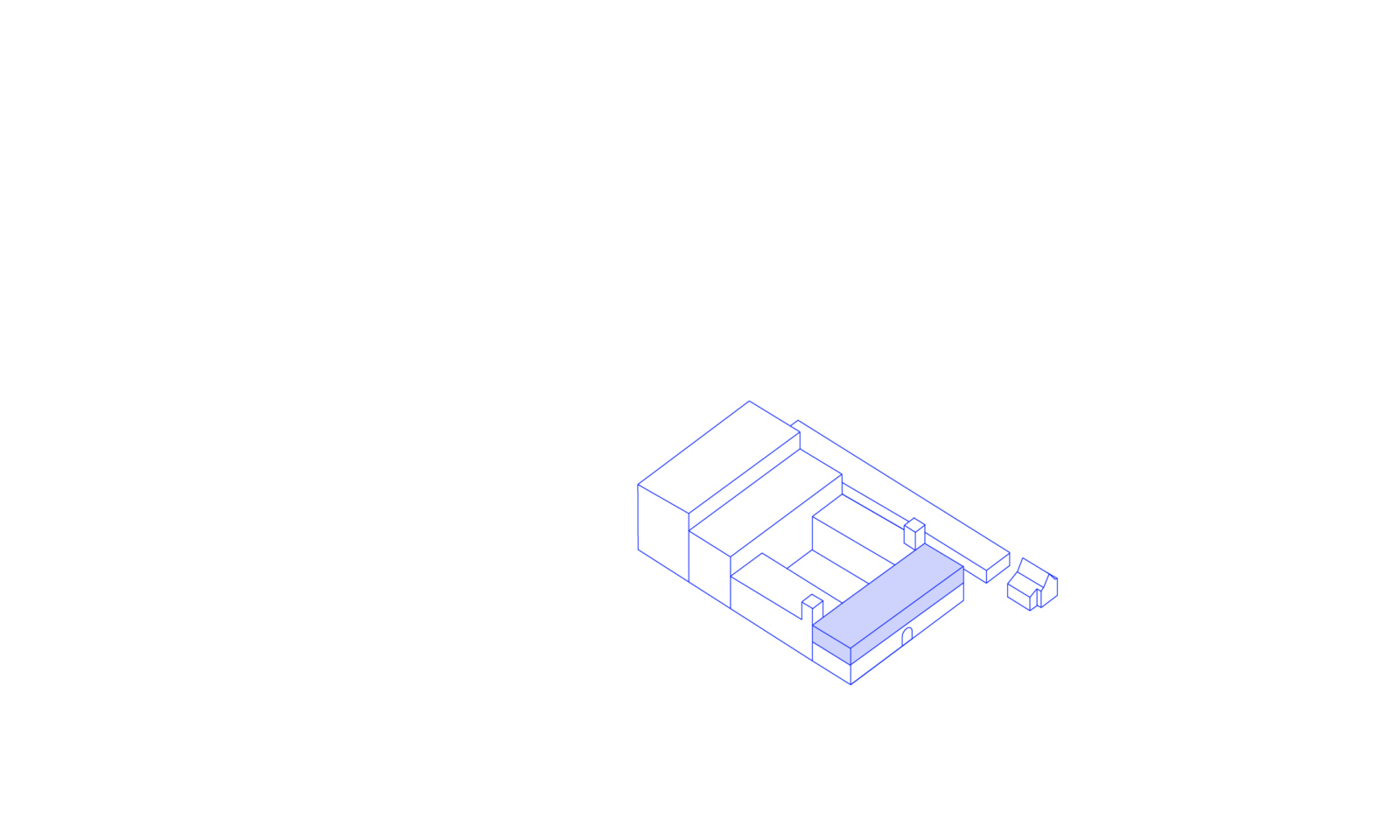
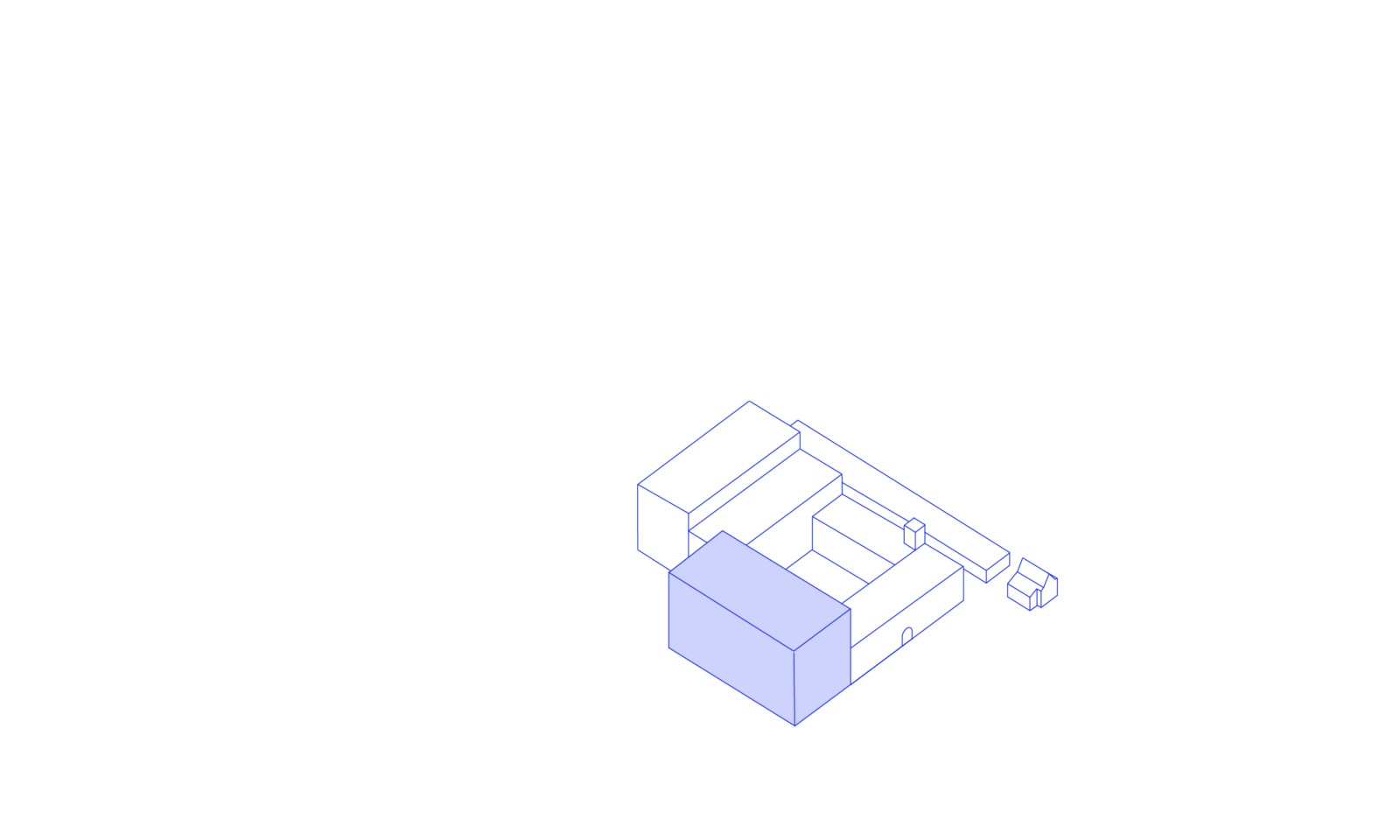
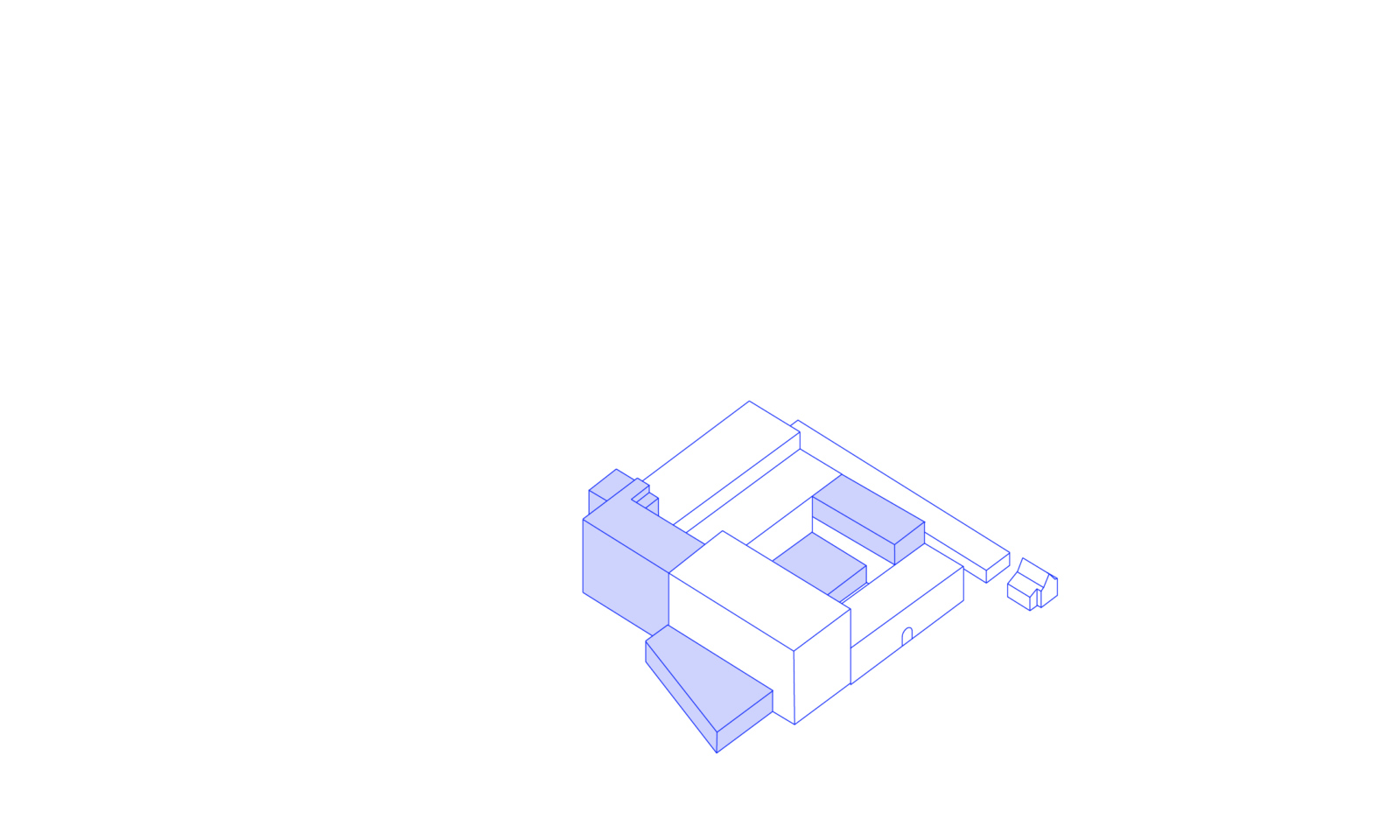
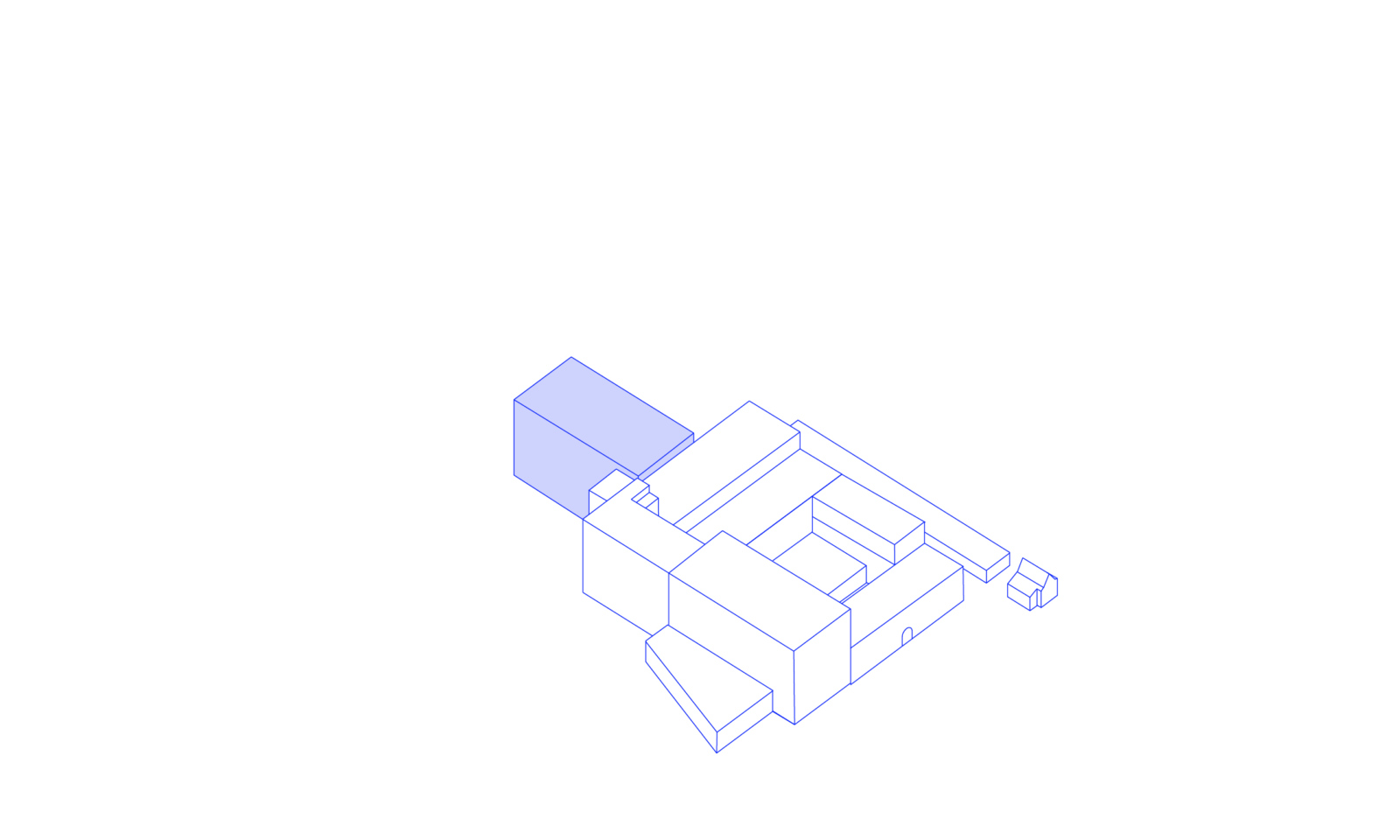
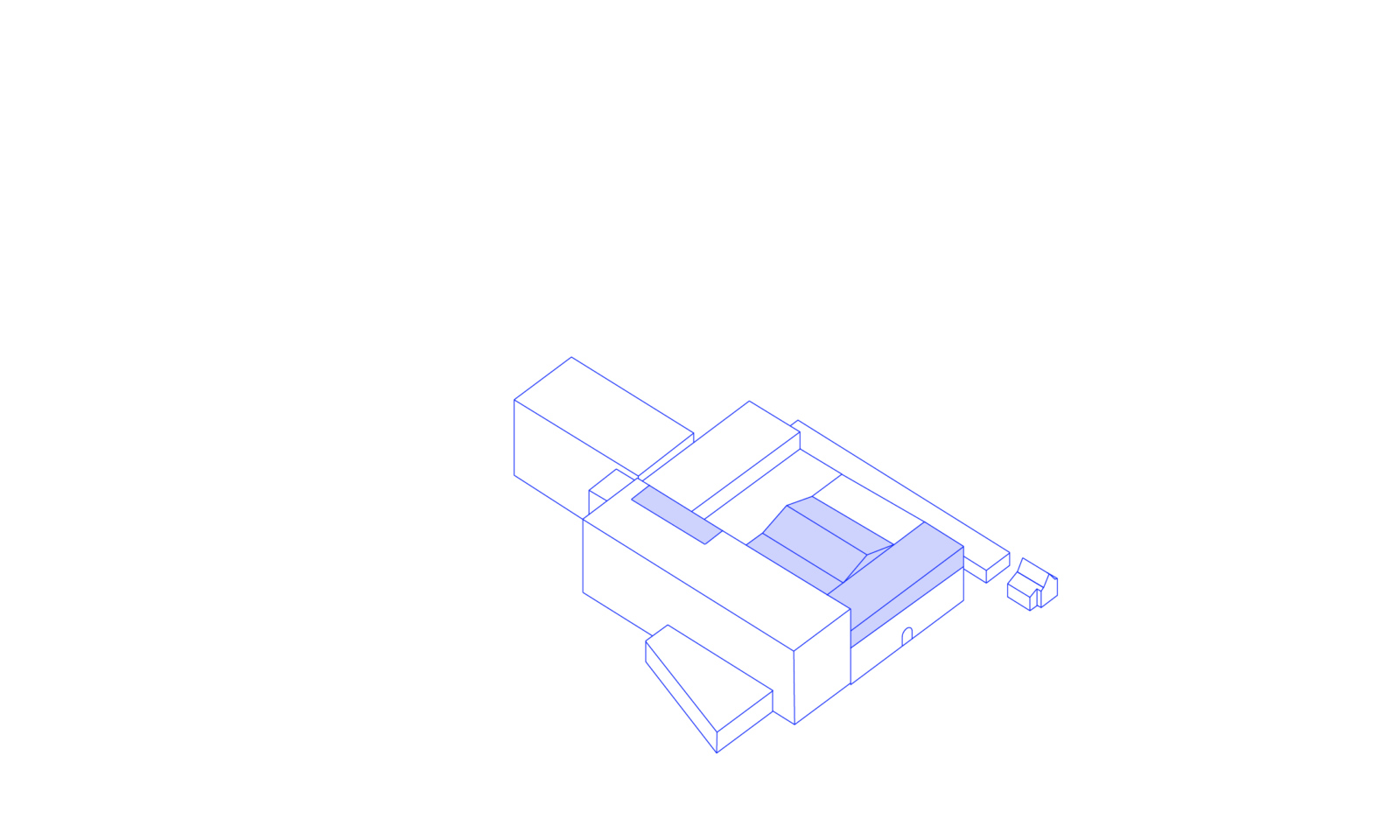
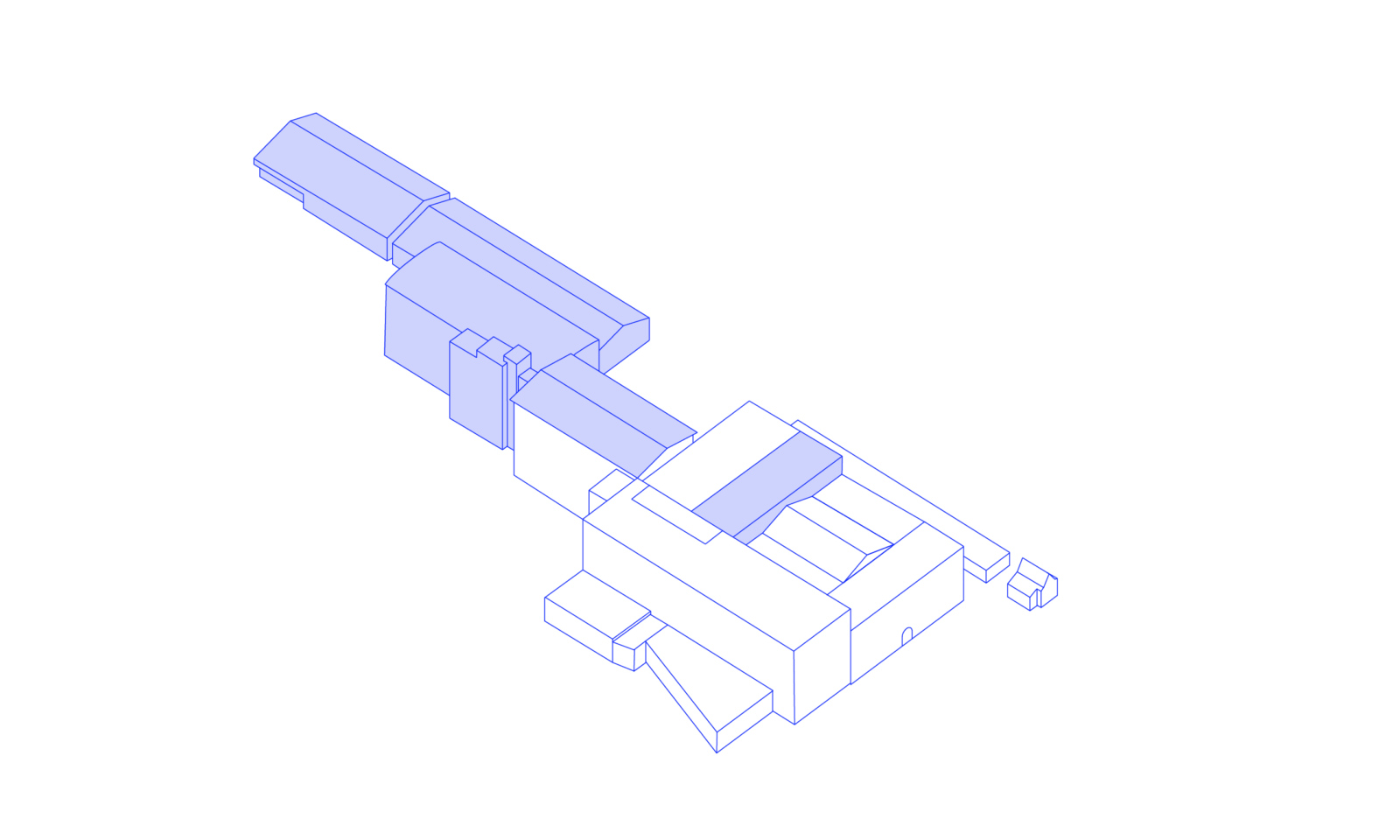
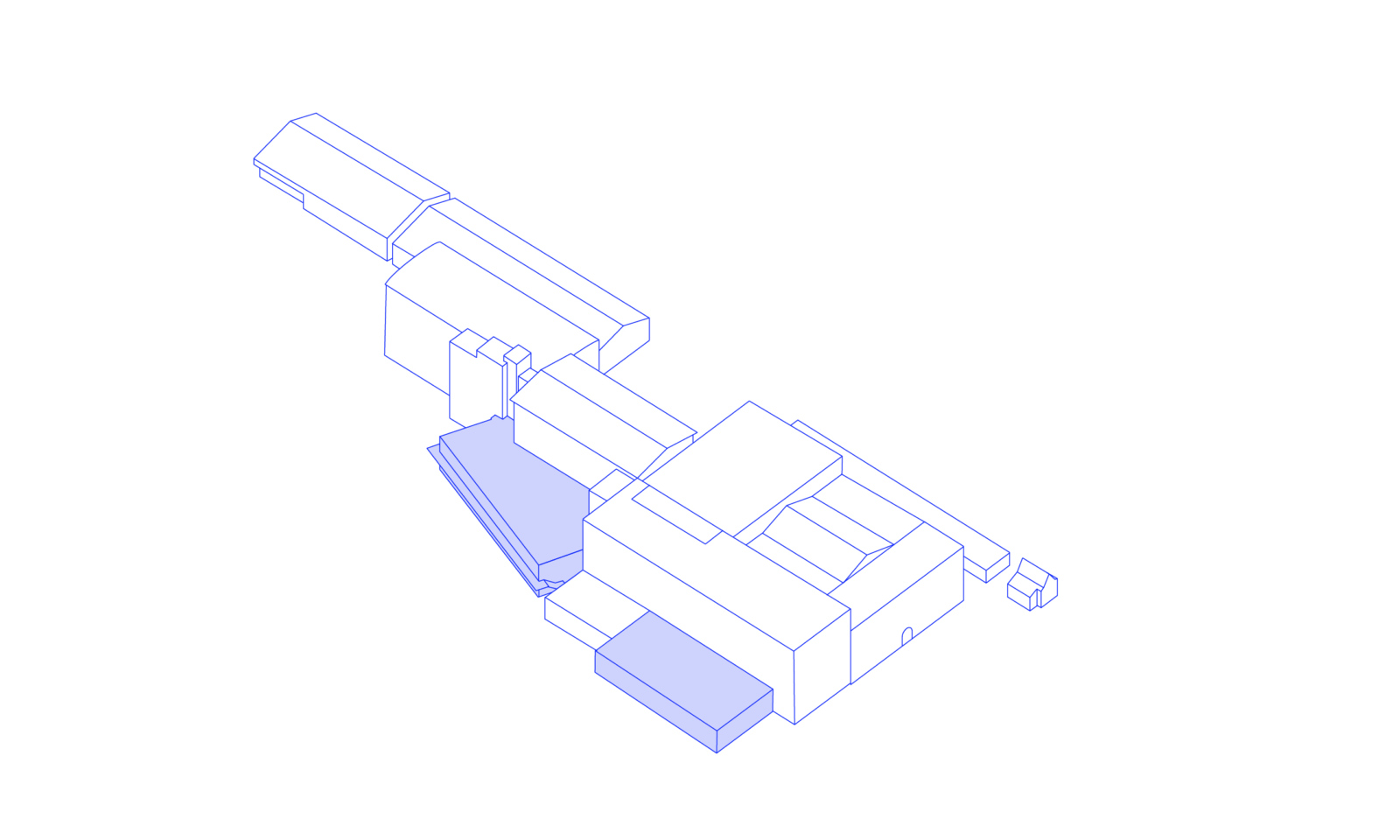
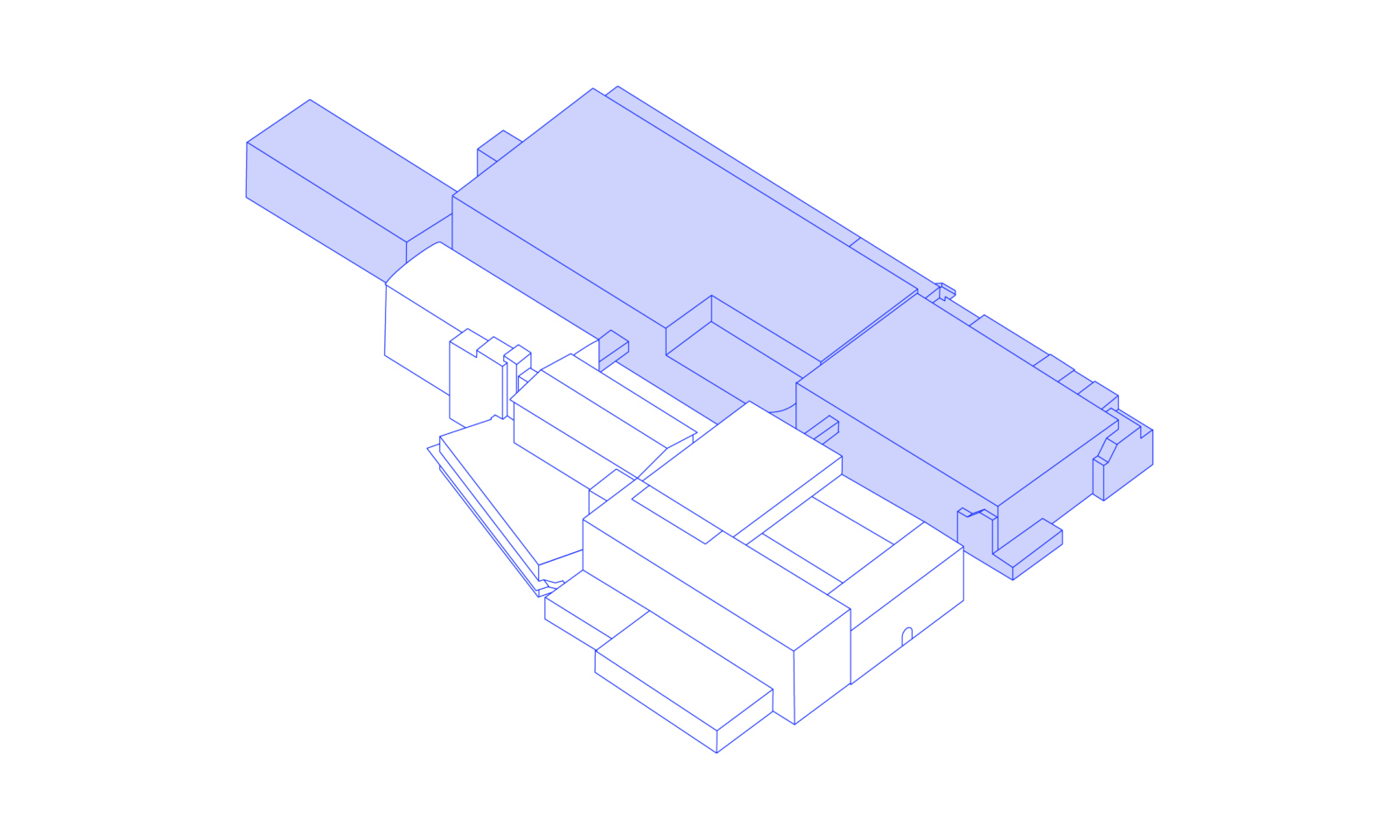
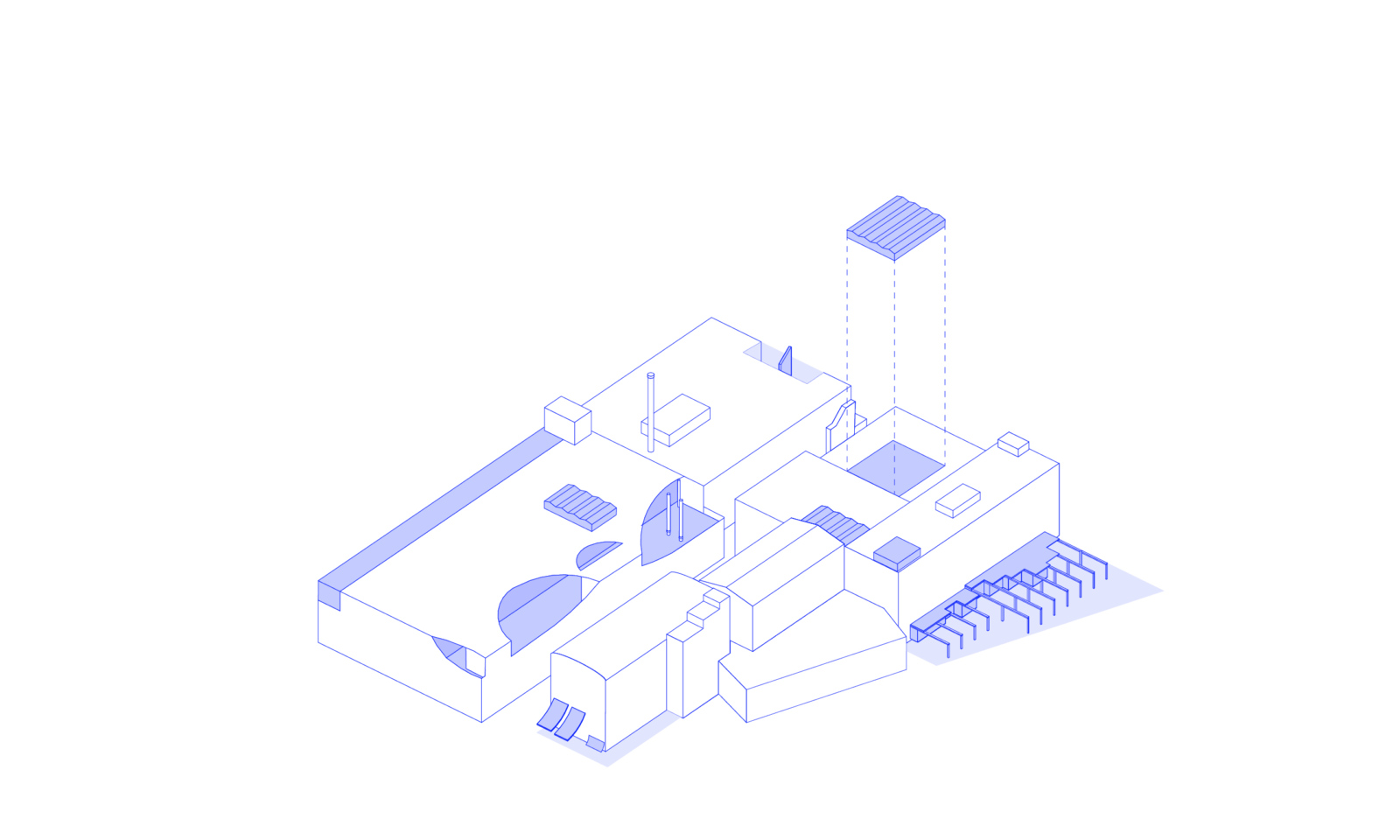
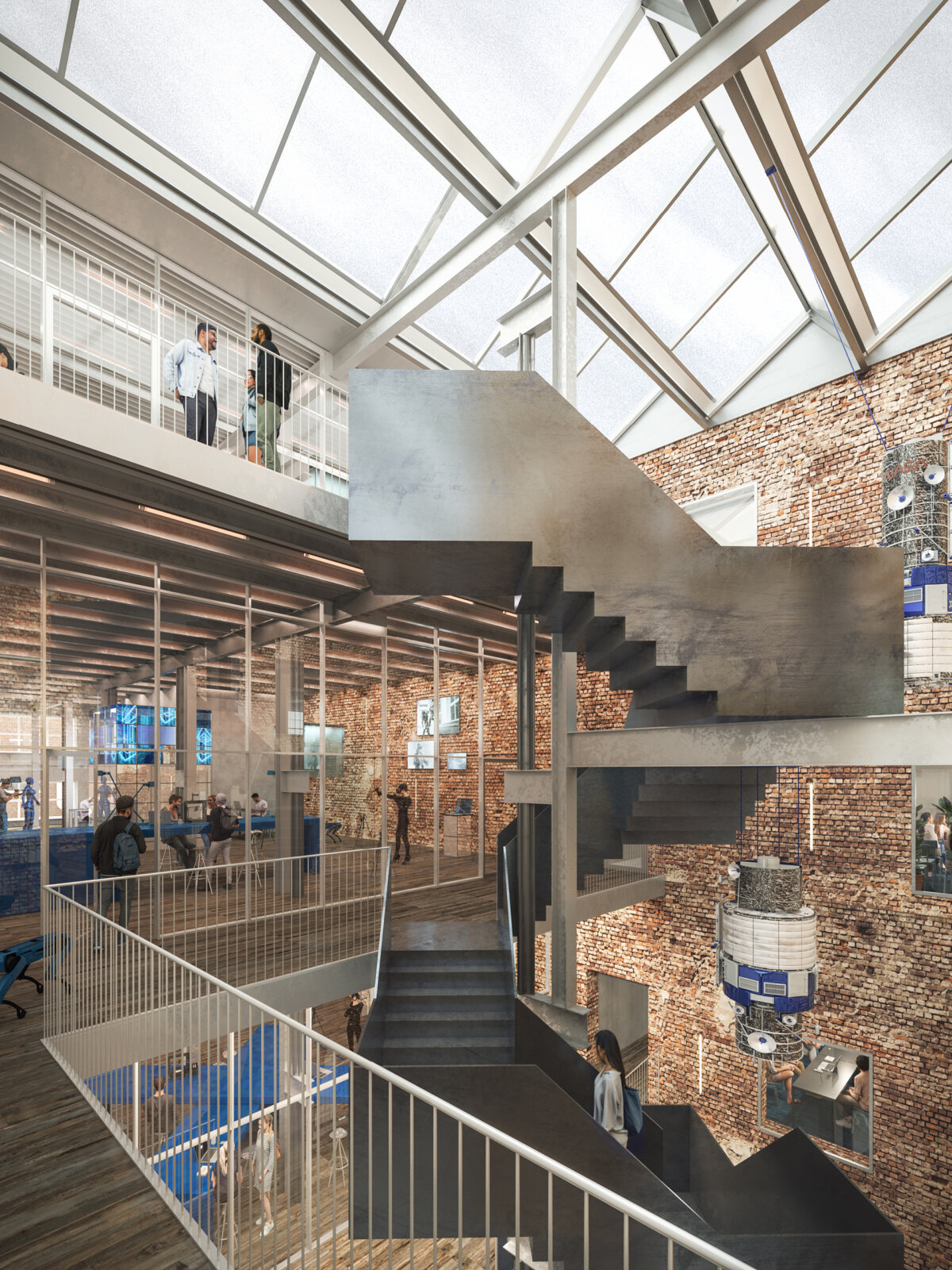
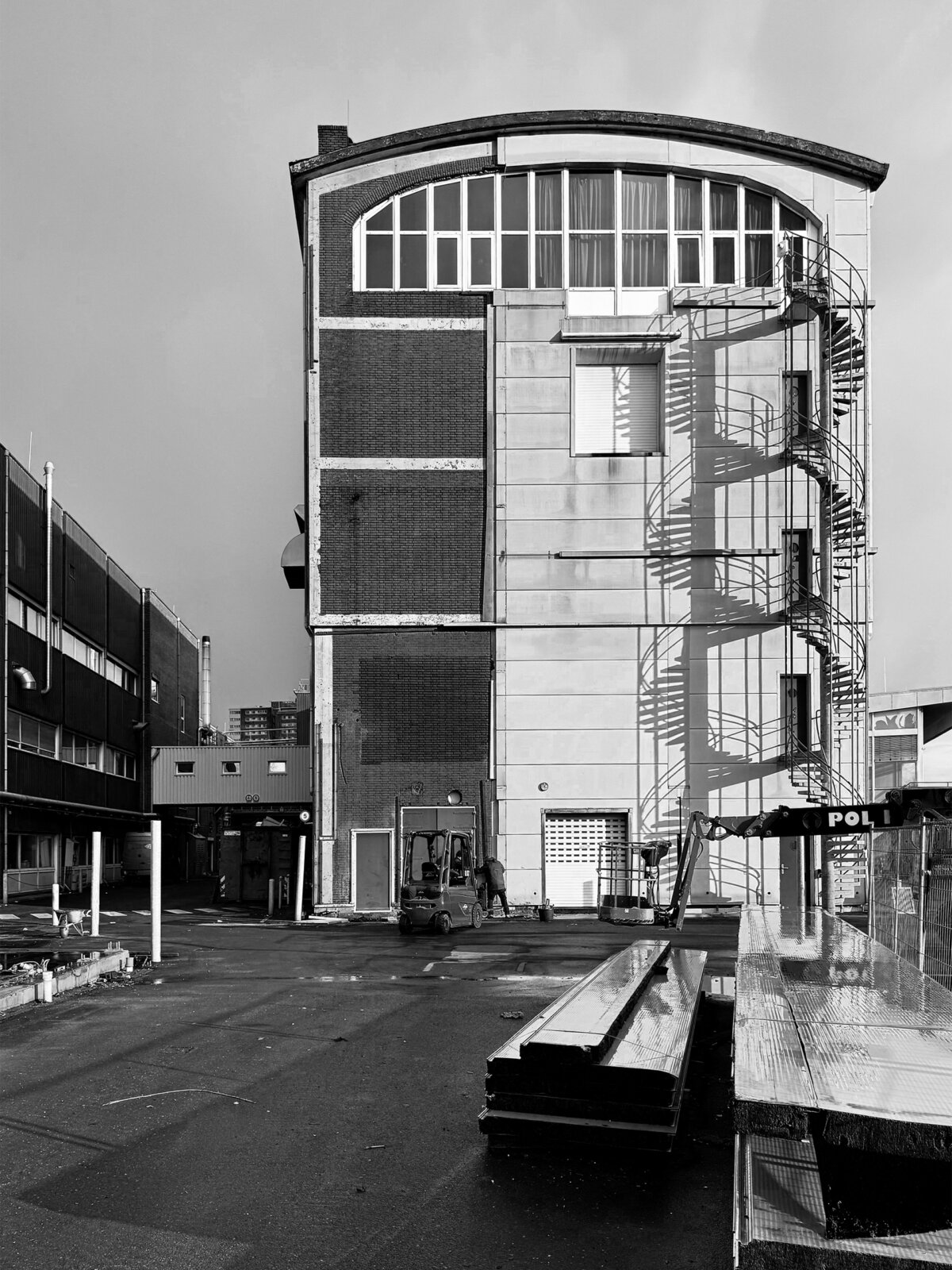
The Niemeyer complex tells its story through architecture: brick halls from 1904, raw concrete additions from later decades, and the marks left by former industrial use. Wherever possible, we carefully preserve and restore the original structures. Our design embraces these layers rather than smoothing them over — highlighting the site’s evolution through contrast and continuity.
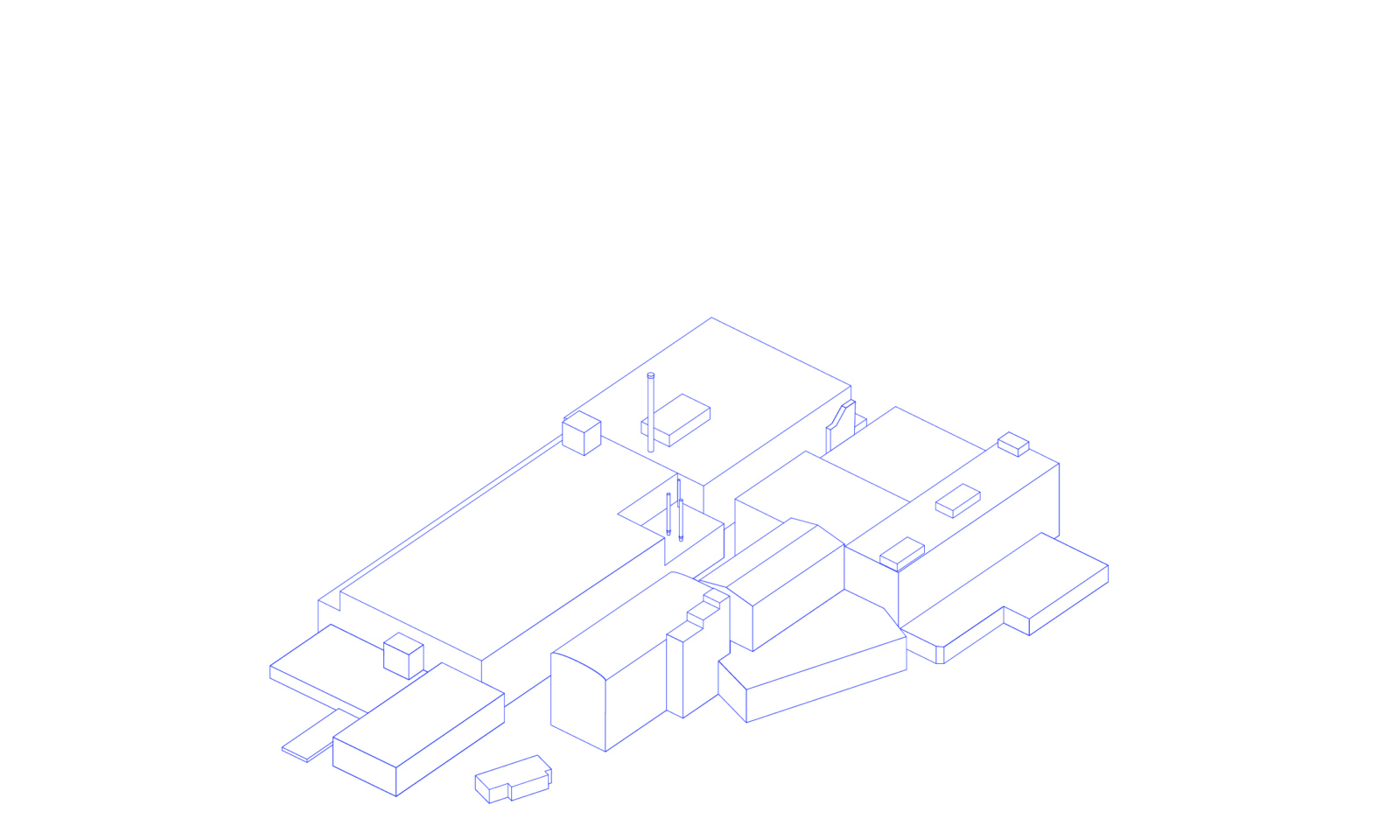
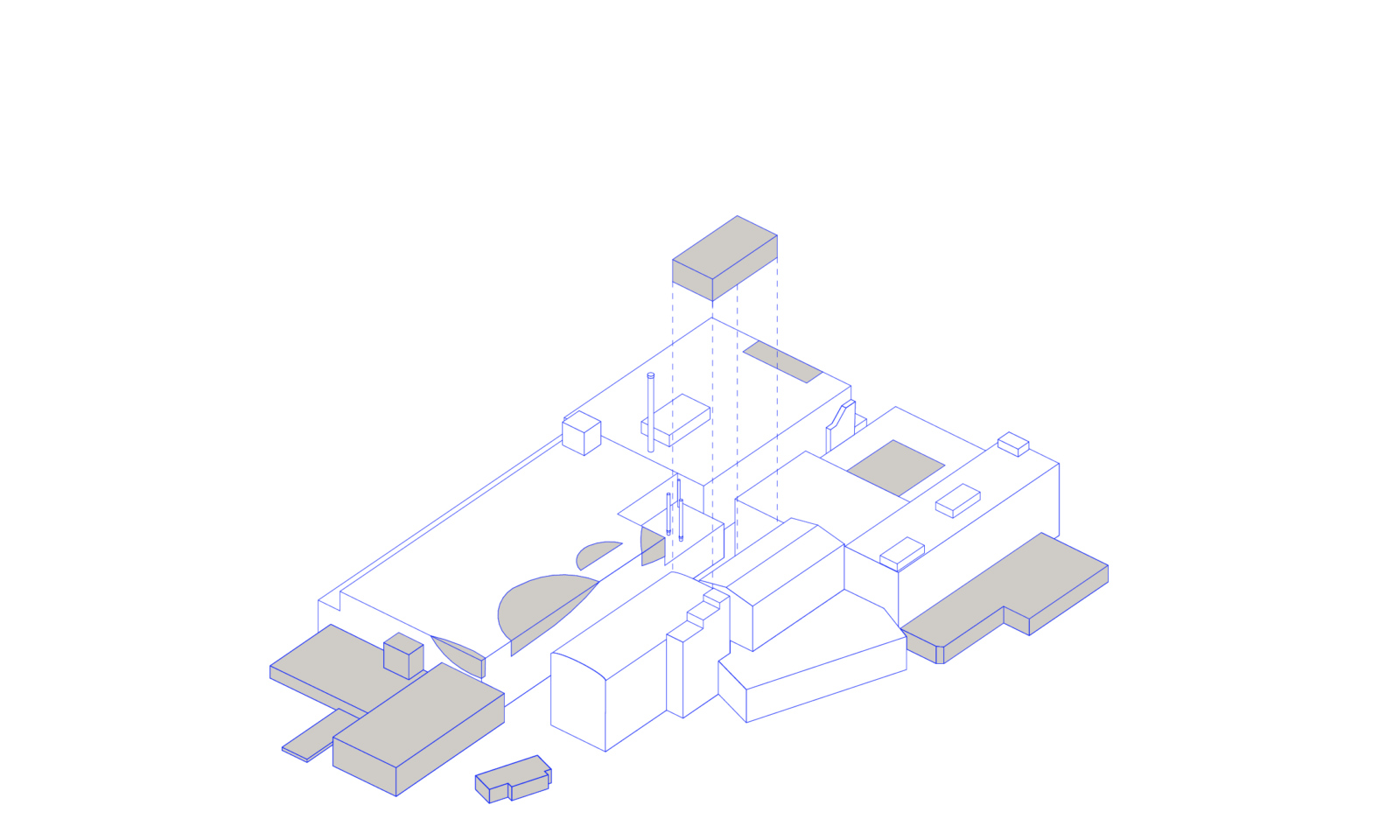
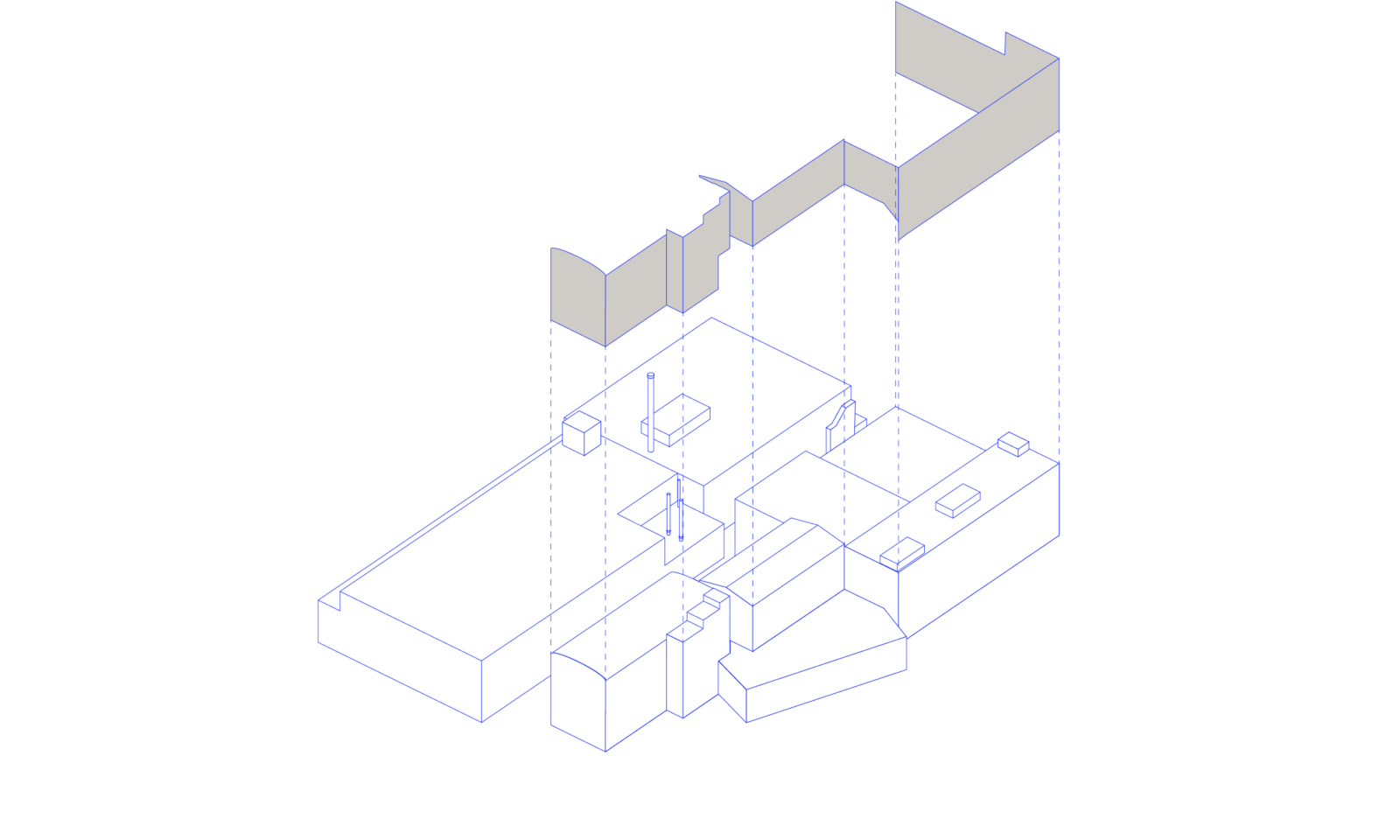
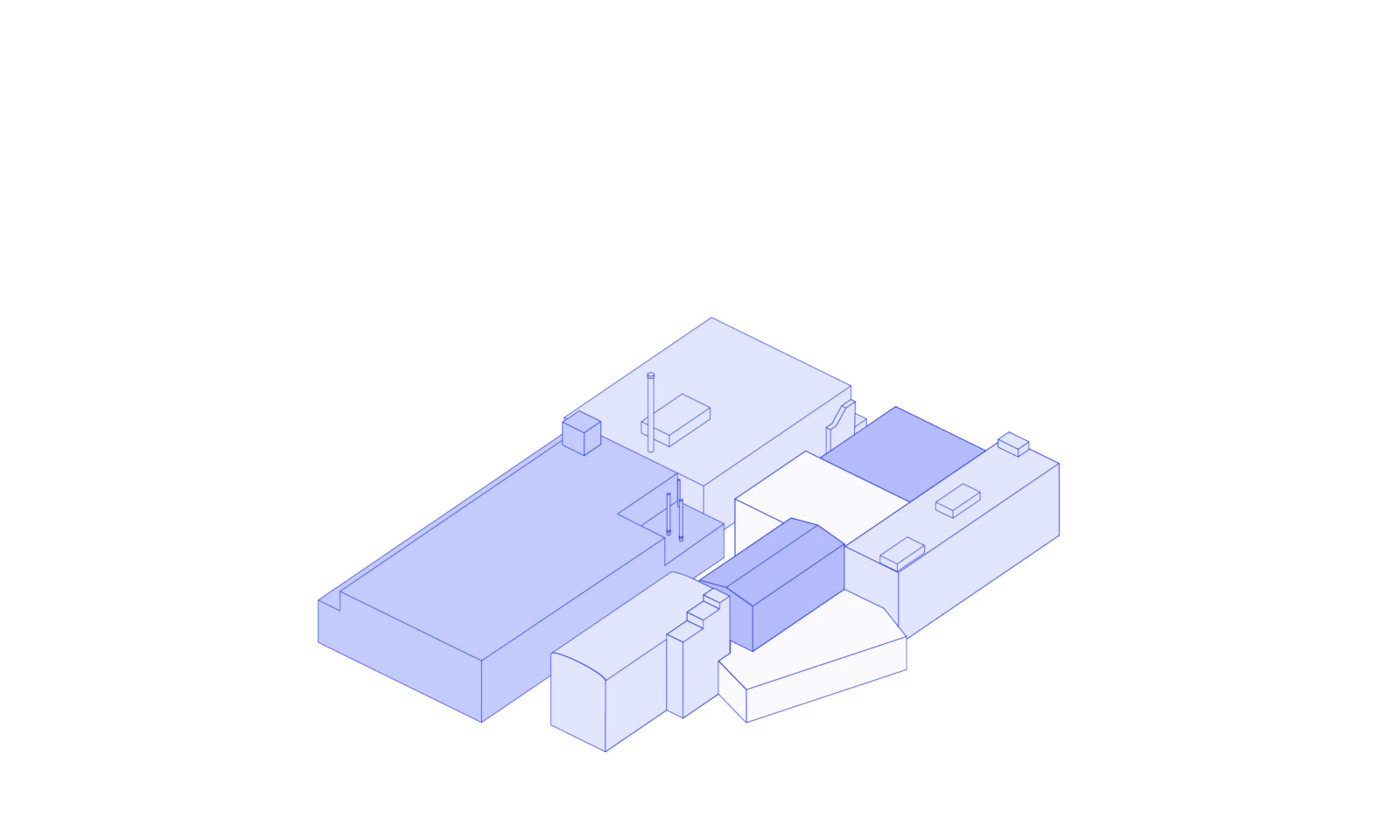
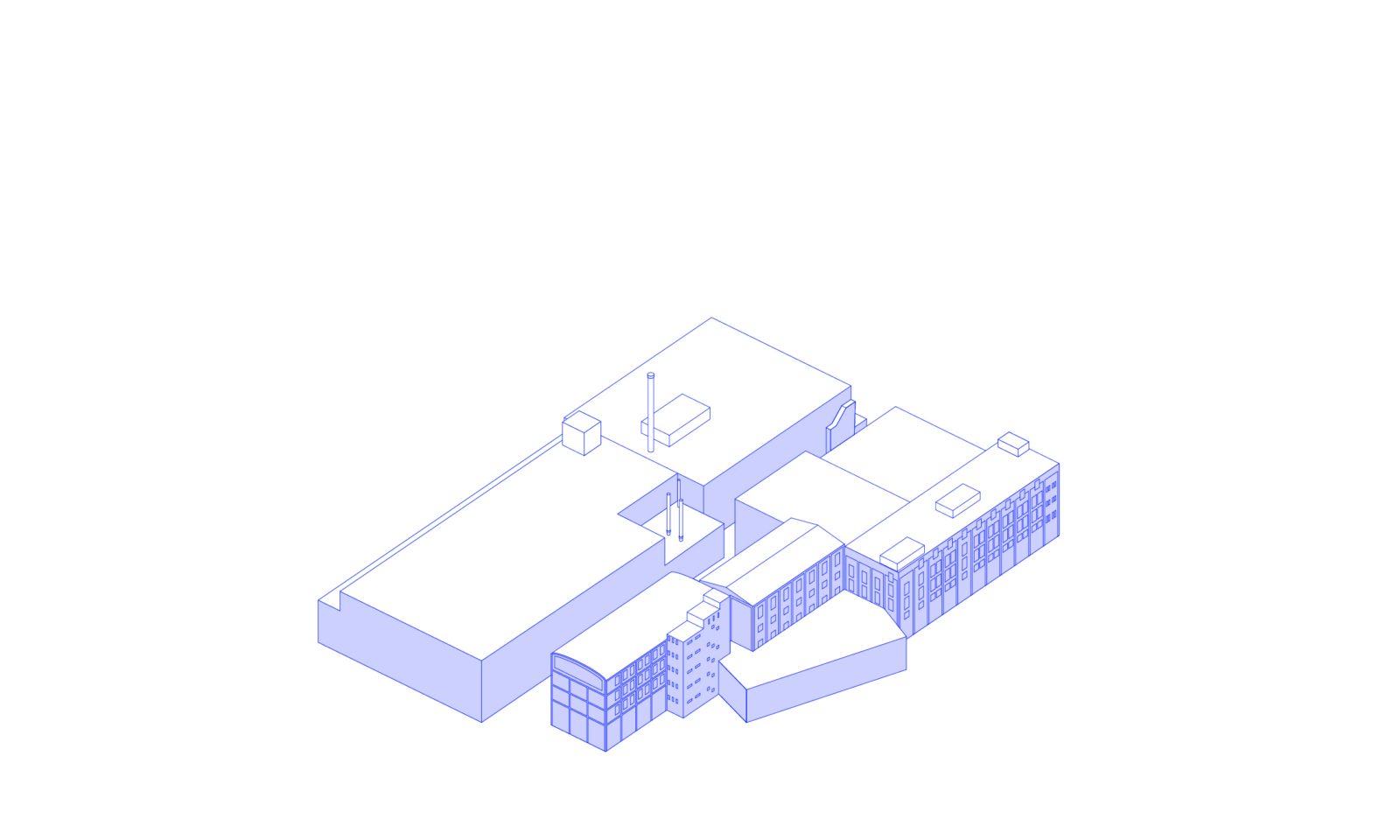
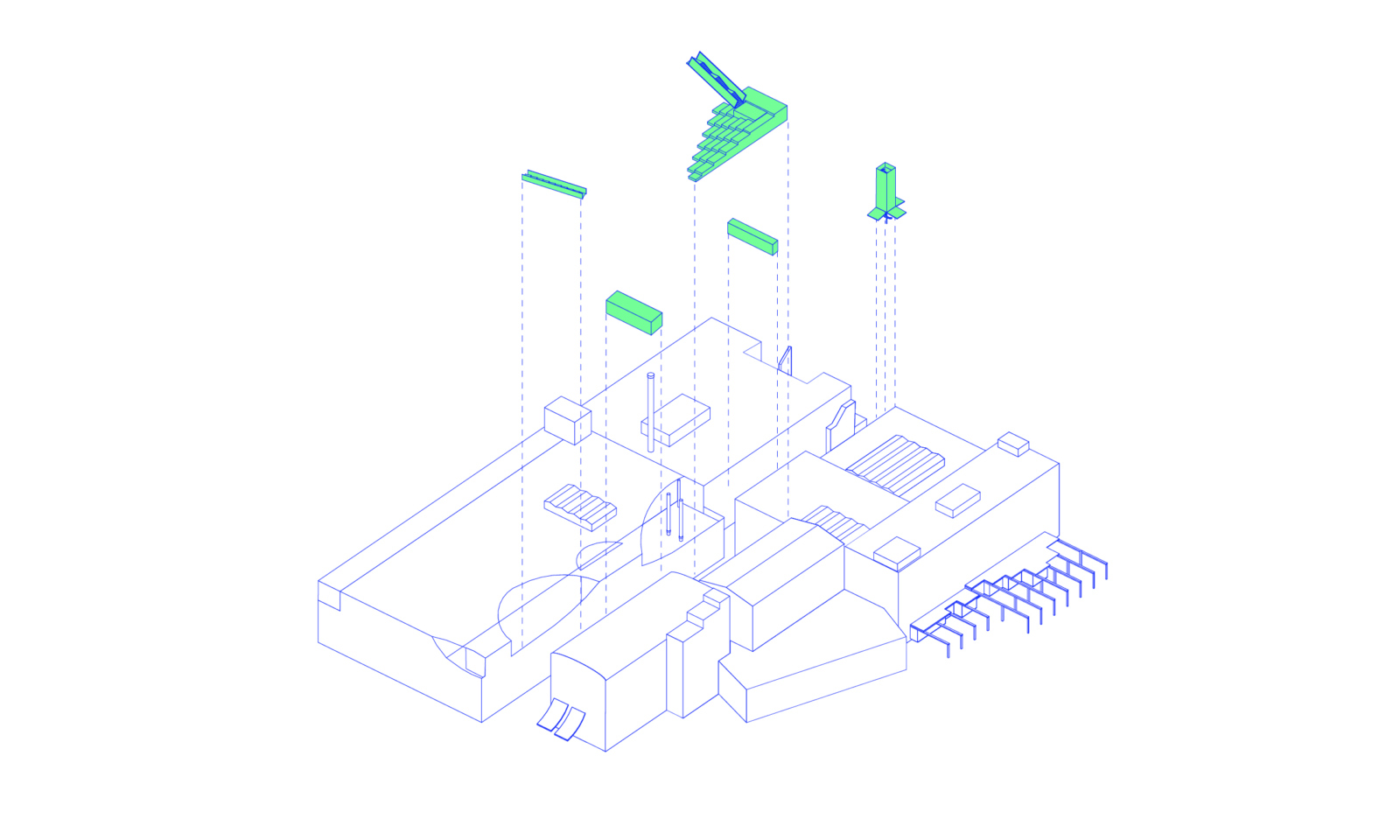
To this historic bedrock, we add a series of spatial elements that utilise the site’s layered nature, while forging new connections between people, programs, and place. Every intervention strengthens the dialogue between old and new, building and city, interior and landscape.
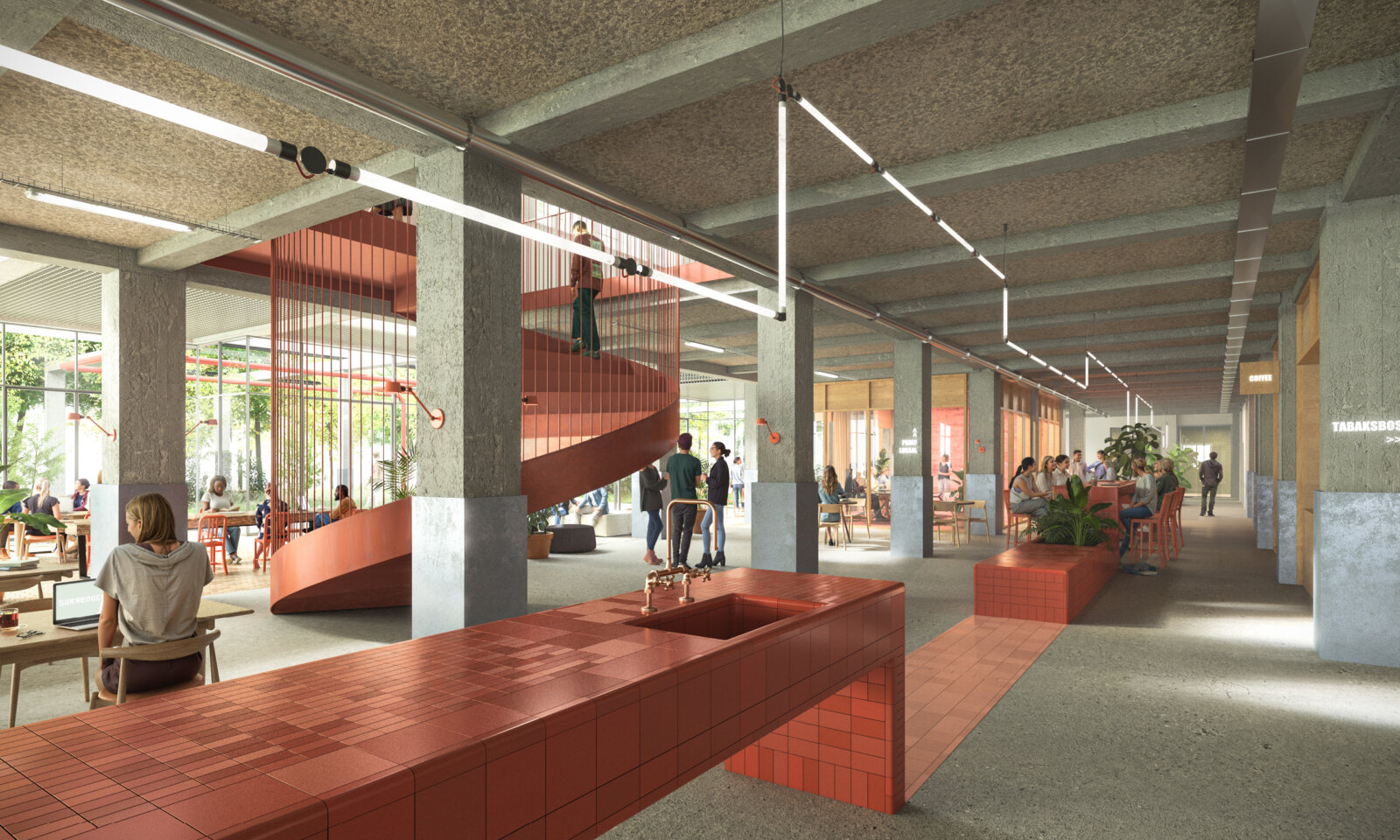
We carried the concept of opening up the factory into the interior design throughout the site. As such, we turned the interior spaces, which were originally cluttered and dark, into bright and attractive places with a clear logic and routing, while ensuring the historical character of the original factory was preserved.
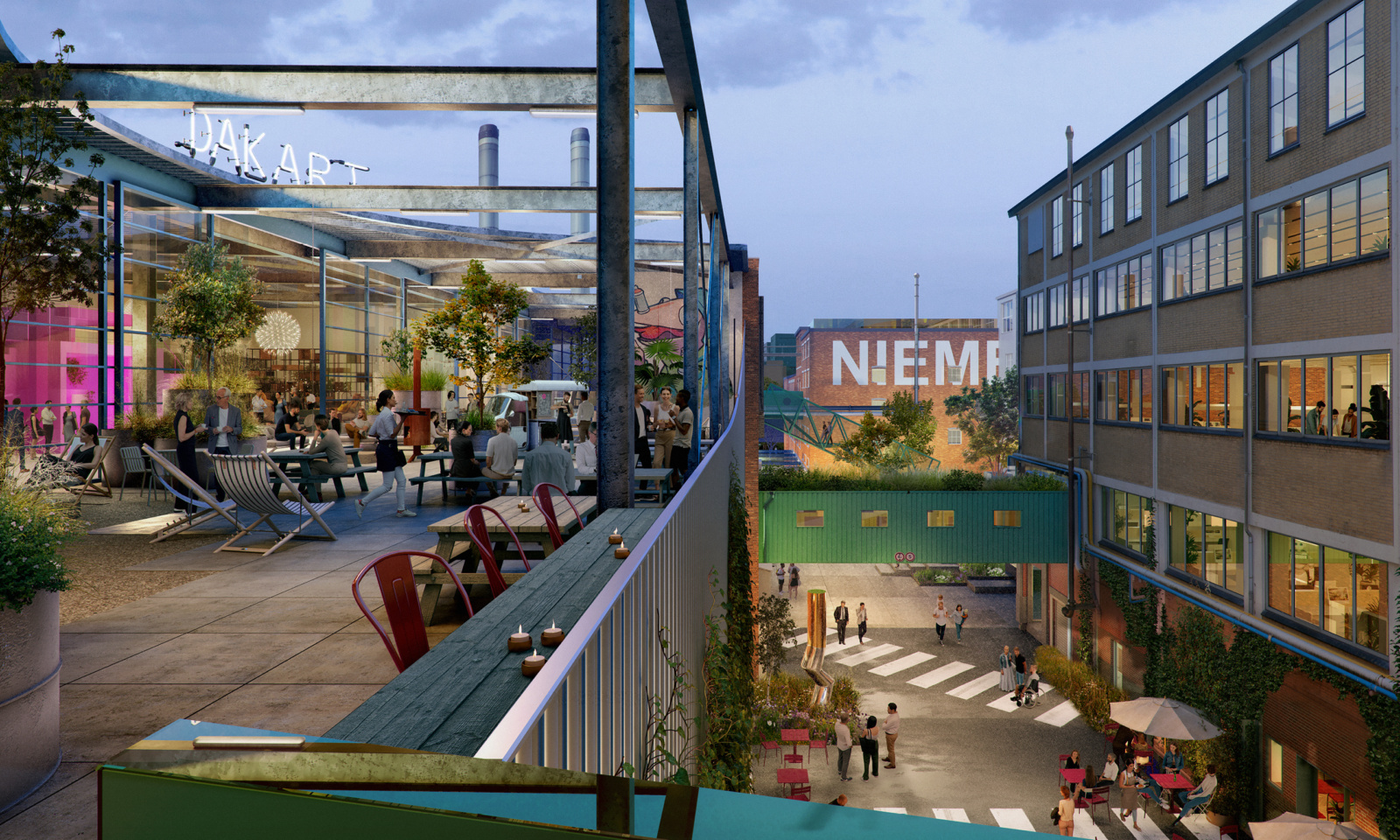
Atop the repurposed ART building, the DAK ART rooftop terrace transforms the former industrial roofscape into a cultural space overlooking the Industriestraat.
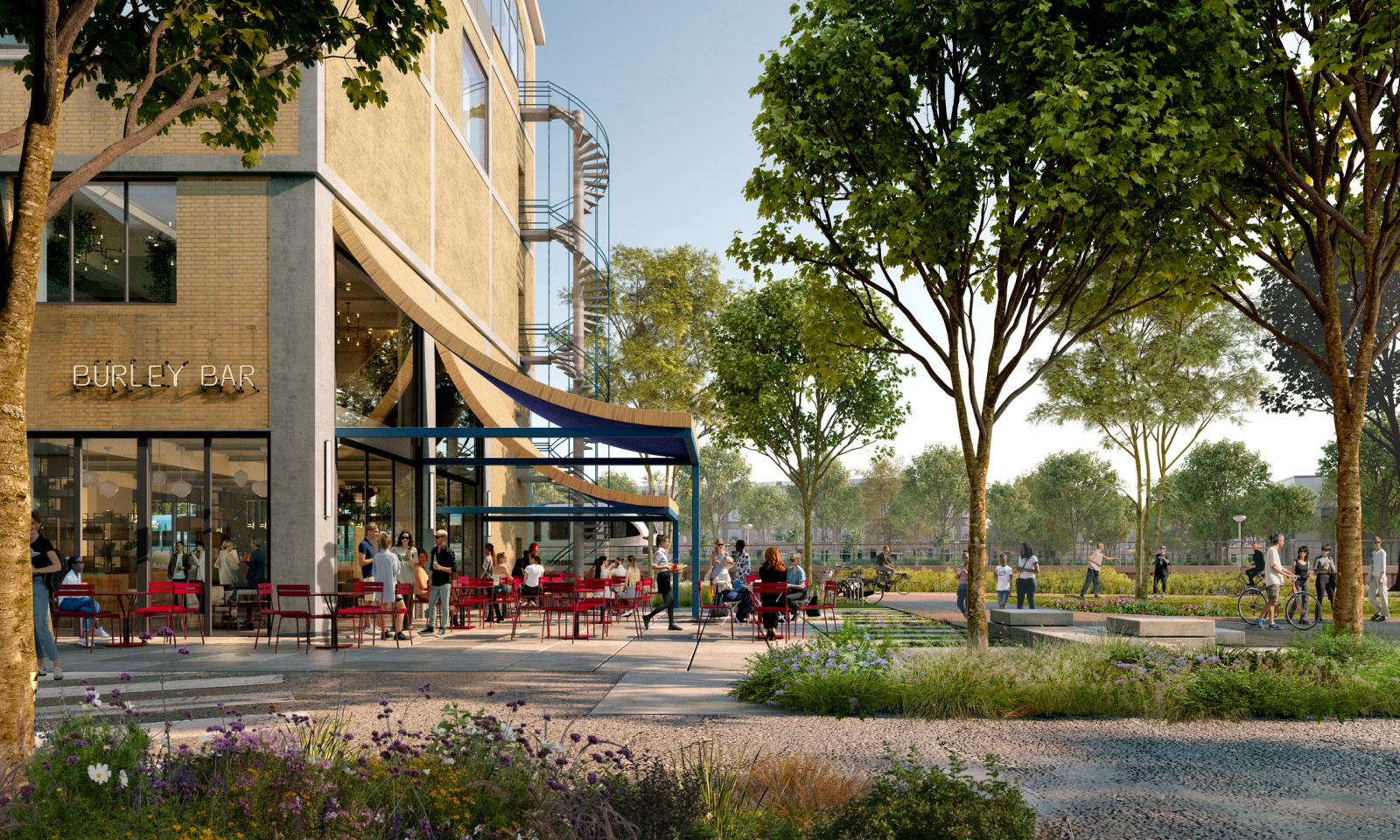
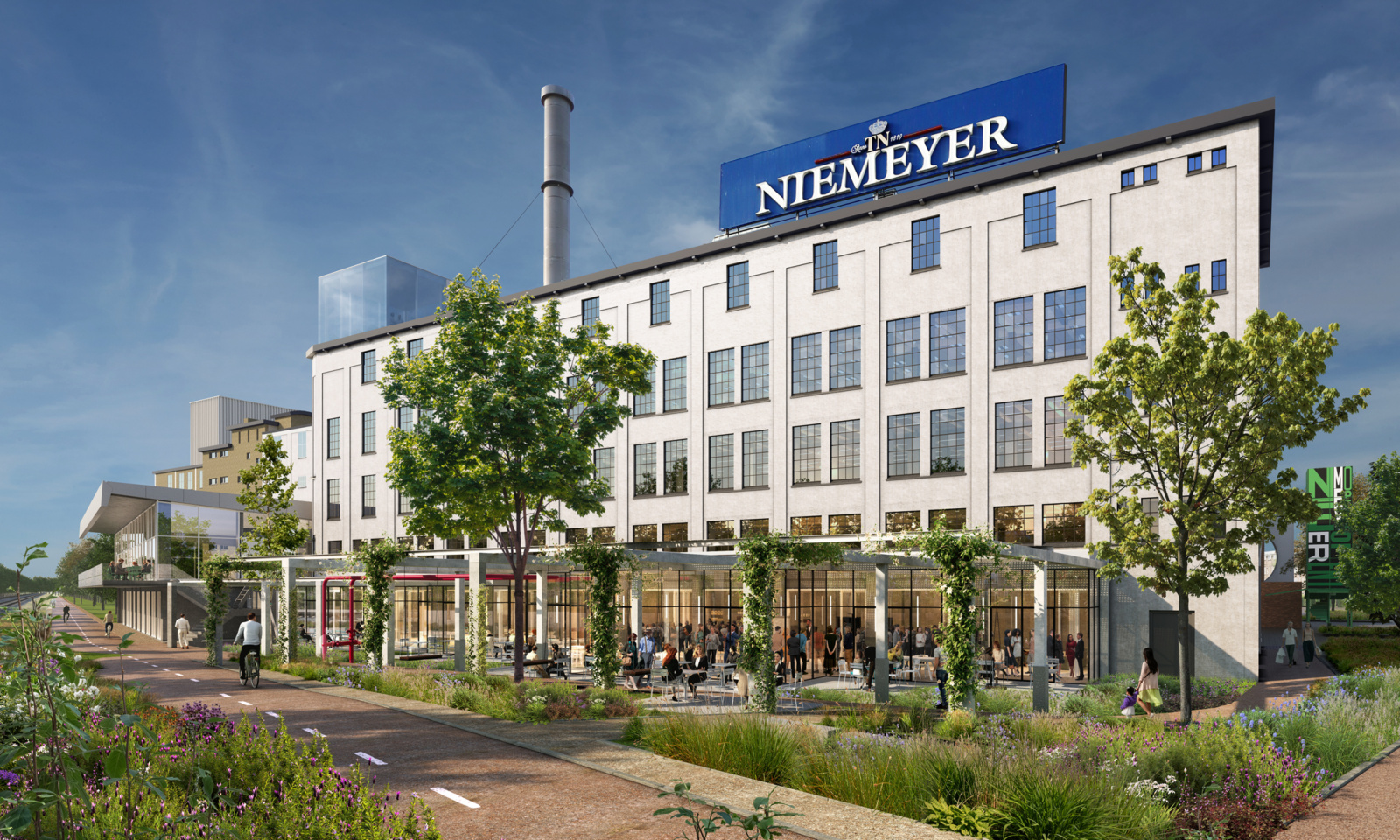
Across, the Burley Bar opens with a transparent facade that dissolves the boundary between interior and public realm. This activation of the ground floor breathes life into the adjacent urban park Spoorpark. Daylight filters deep into the space, while generous openings ensure that the bar feels as much a part of the park as to the building.
To bring a wide range of work functions to Niemeyer, we introduce the Shared Facilities: a series of flexible spaces designed to work, collaborate and exchange ideas.
The Lab Pavilion along Spoorpark unfolds as a flexible, modular environment for digital makers, startups, and knowledge institutions. Open by design, the pavilion’s structure accommodates rapid reconfiguration, ensuring it can evolve with the needs of its users.
Uncover and connect.
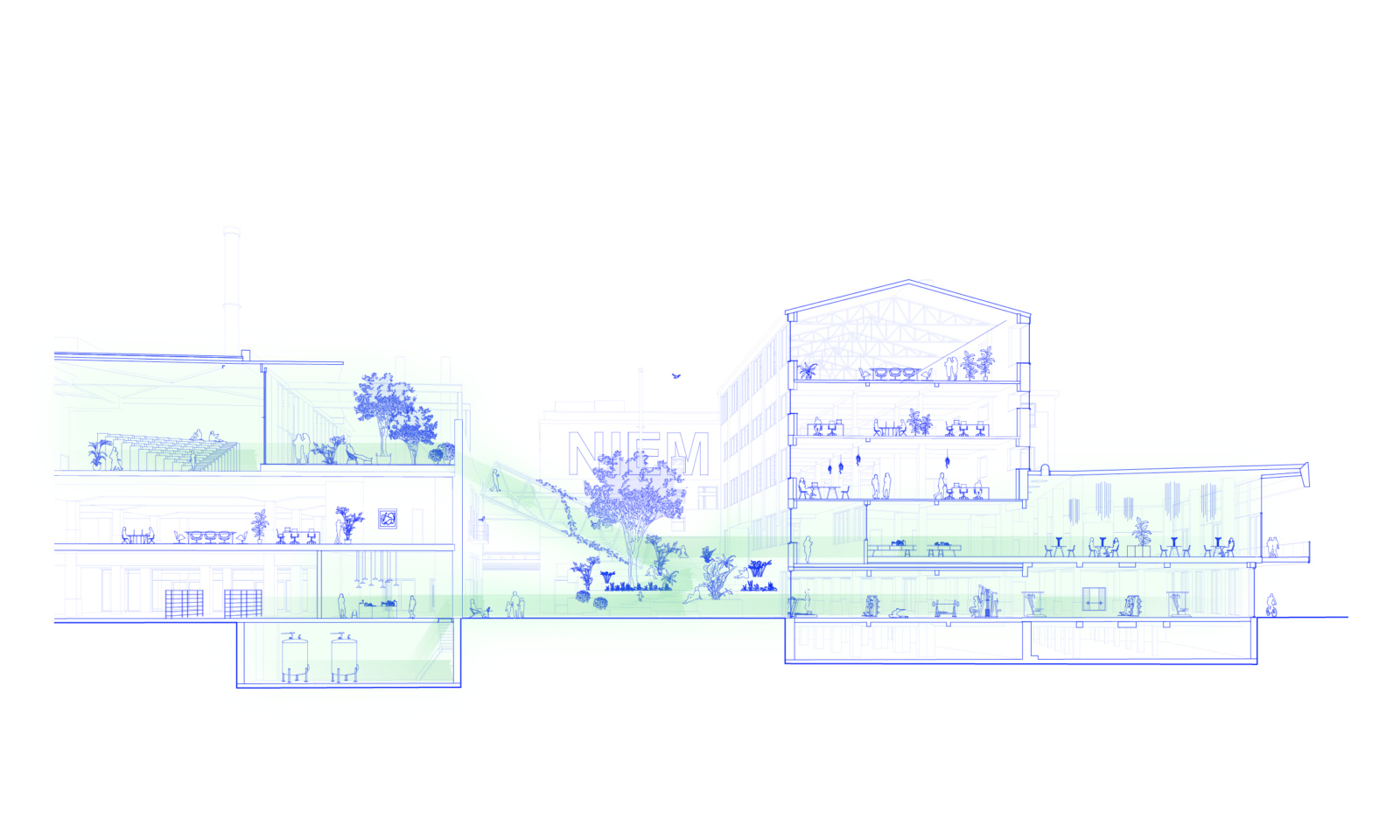
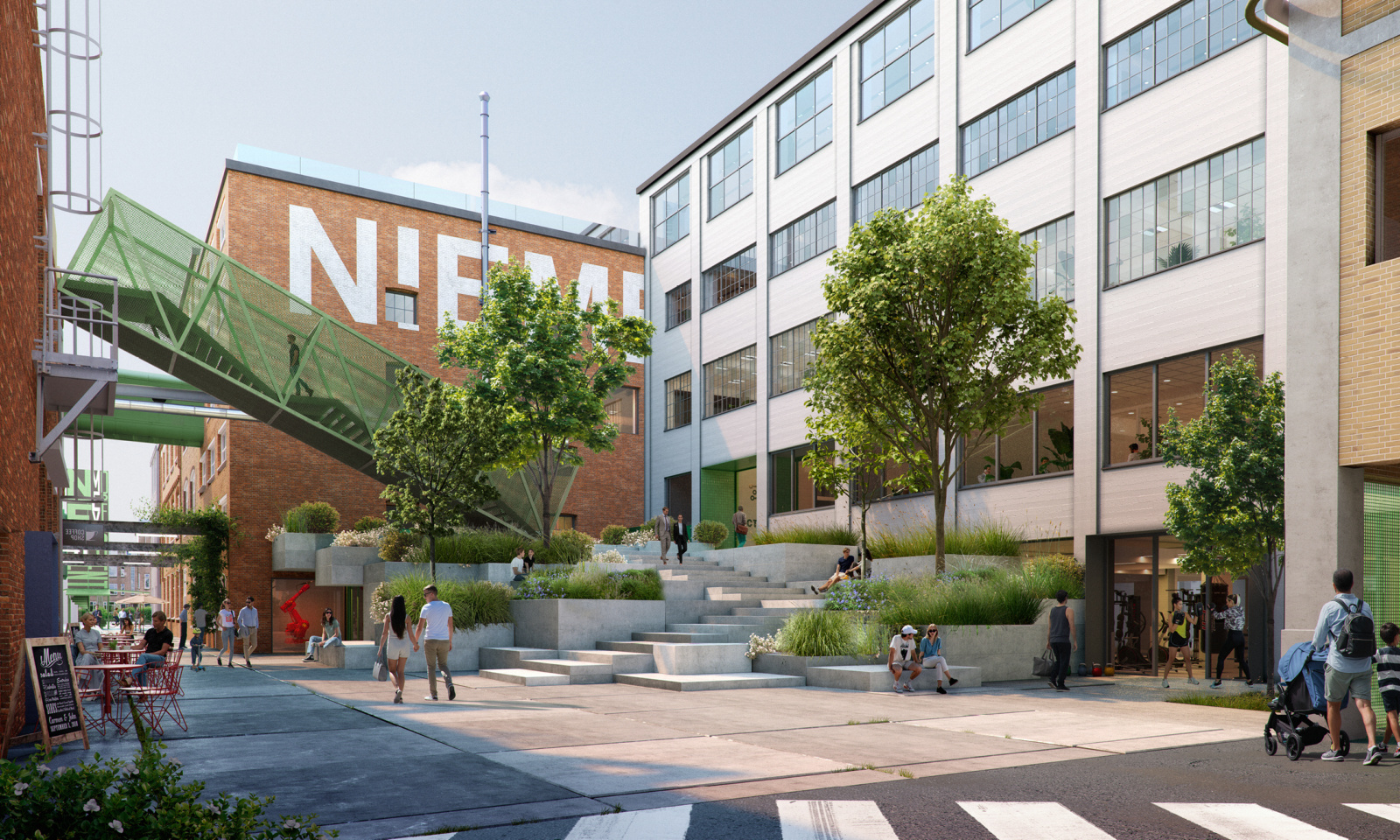
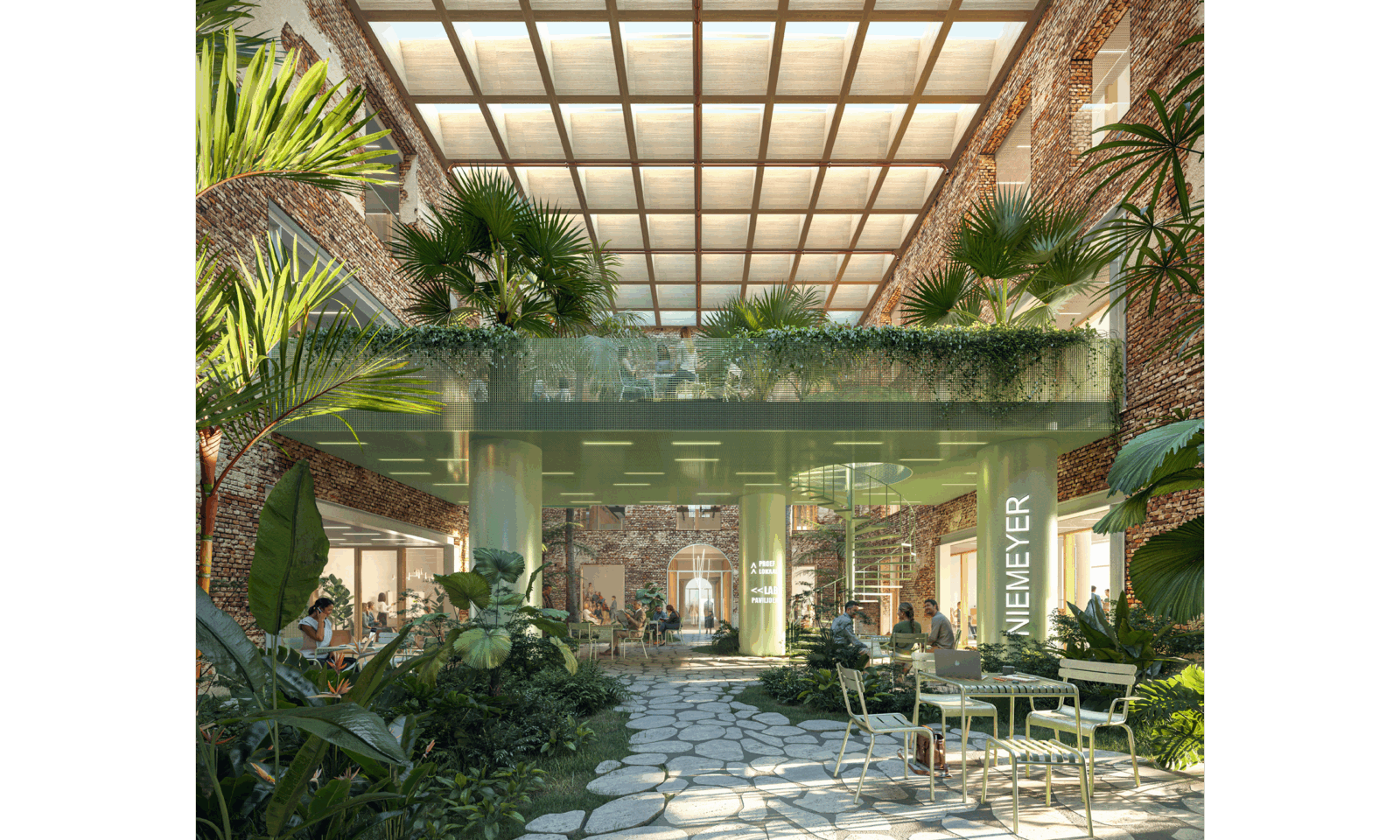
Hidden within the old courtyard in the factory’s oldest building, the Tabaksbos (Tobacco Forest) brings nature and daylight to the heart of the architecture. A distinctive platform structure, mature trees, native planting, and informal seating, turn this former production space into an inner world of calm and inspiration.
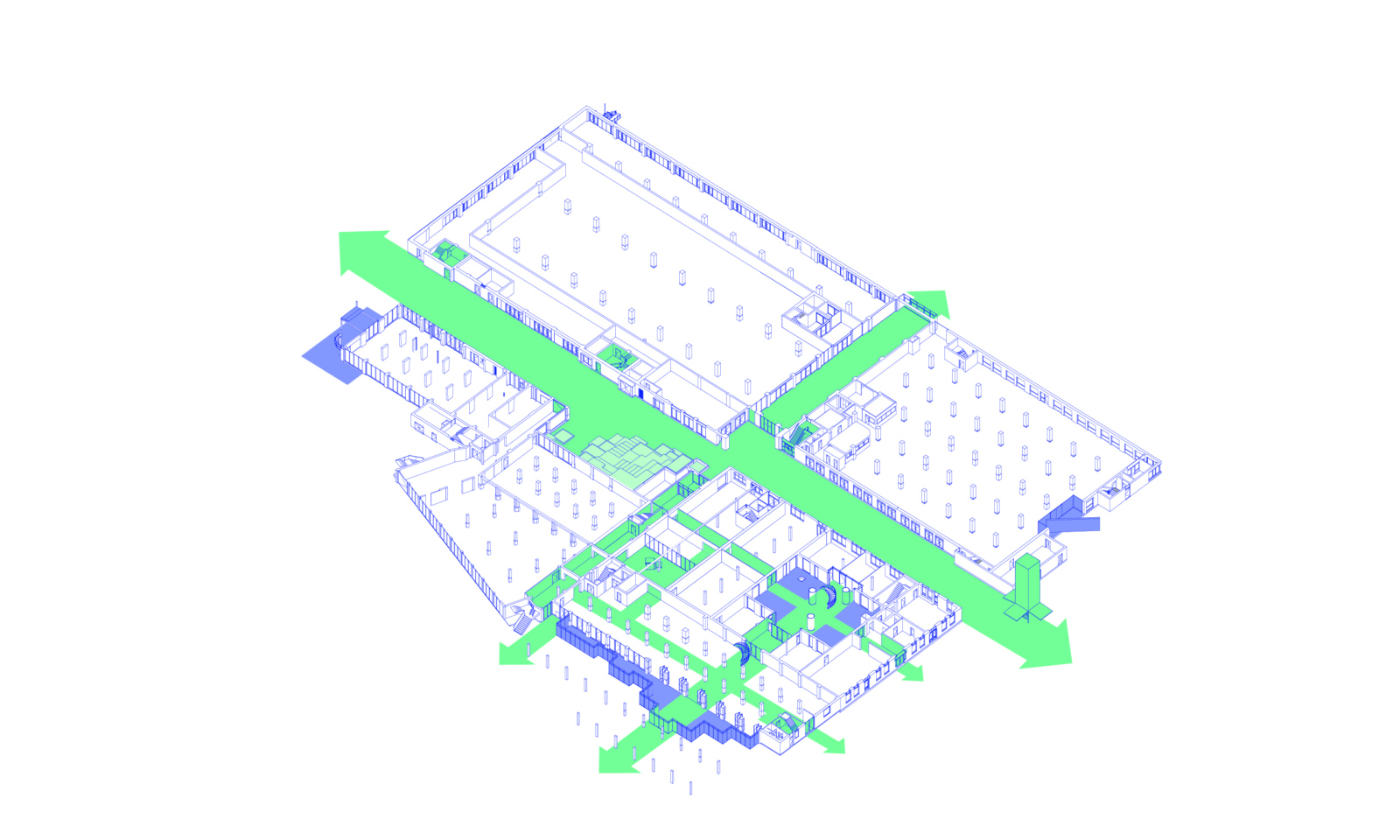
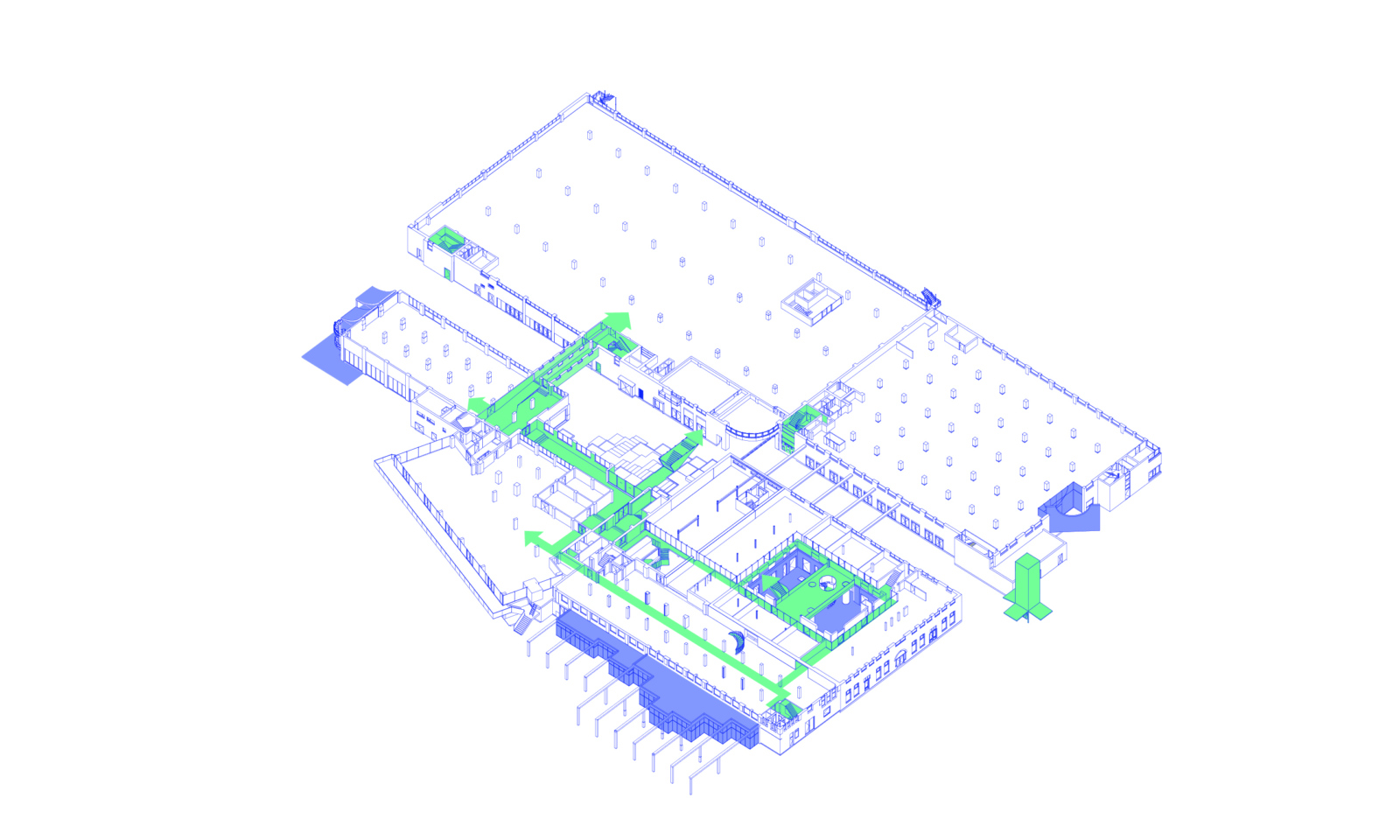
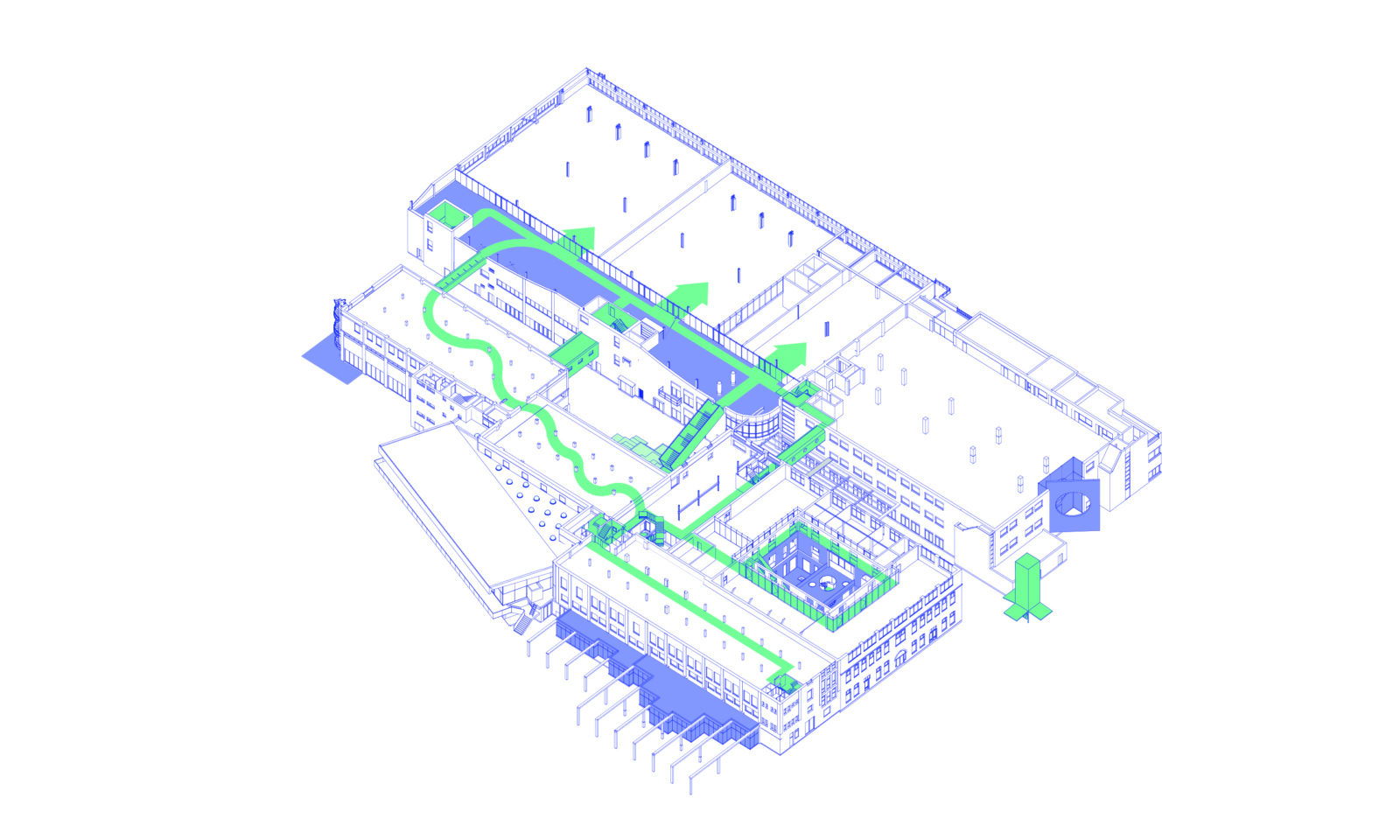
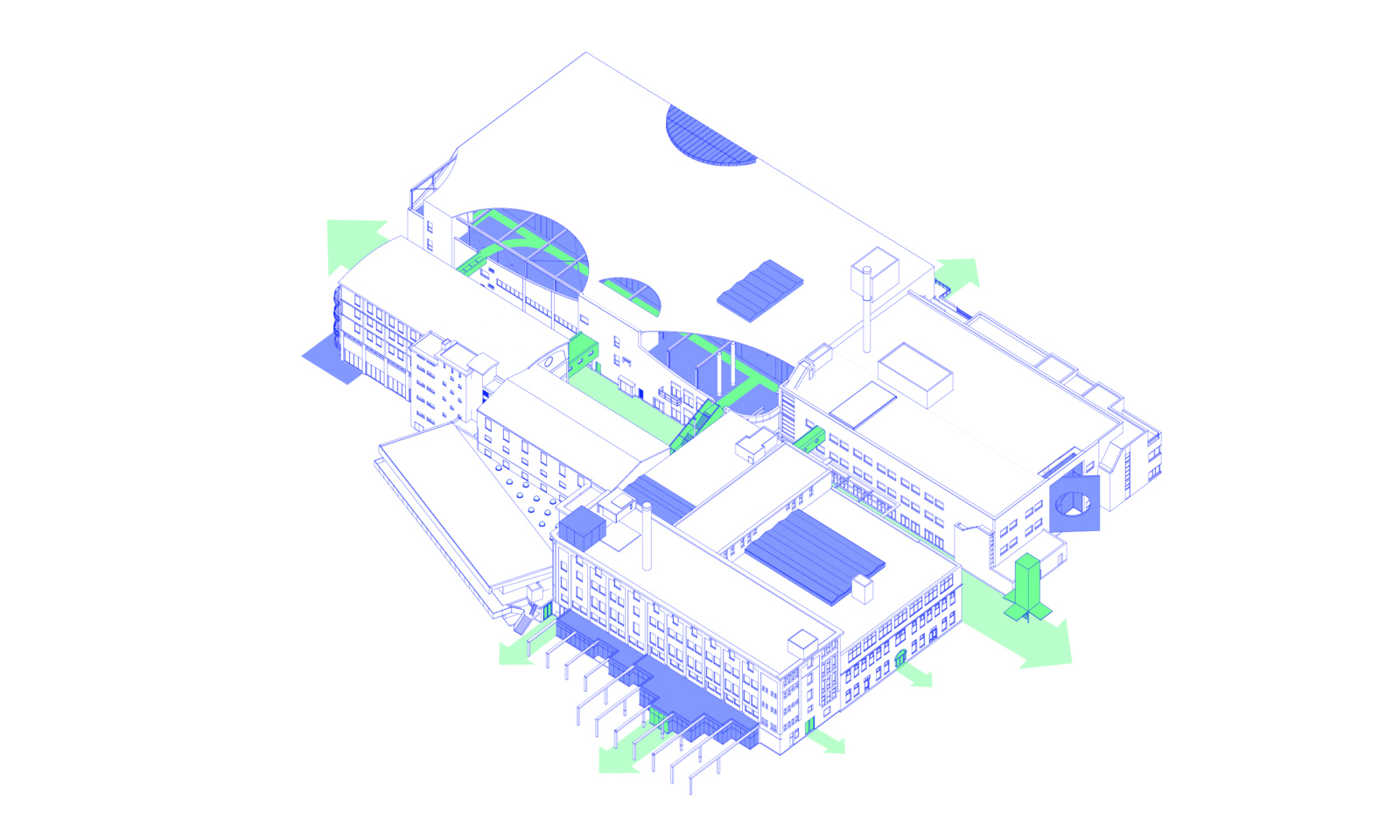
Along the buildings and functions winds the Green Route: a sequence of new stairs, bridges and walkways that traverse the blocks, linking street level to roofs and courtyards. These spatial objects turn the site into one walkable, multi-level spatial experience — where old and new uplift the other.
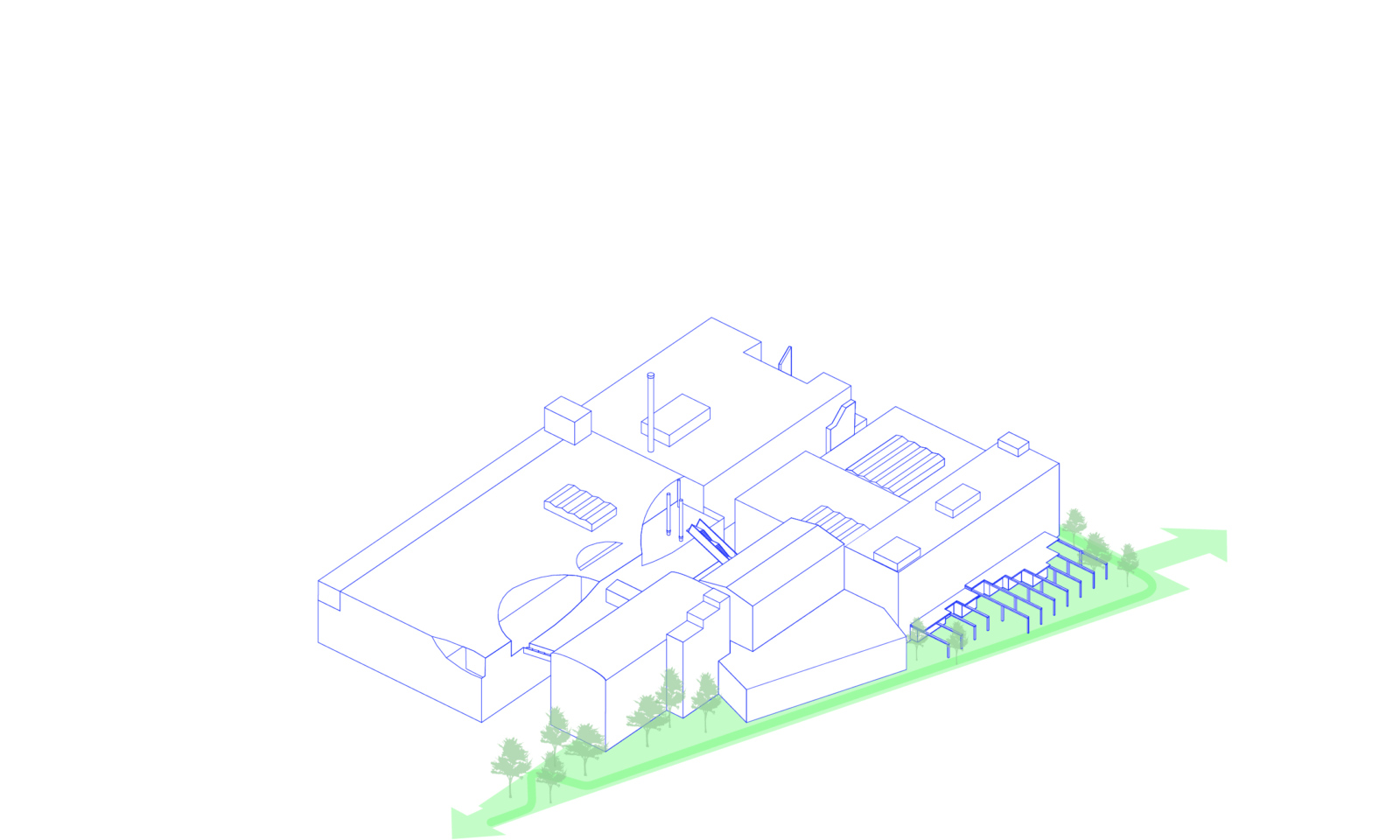
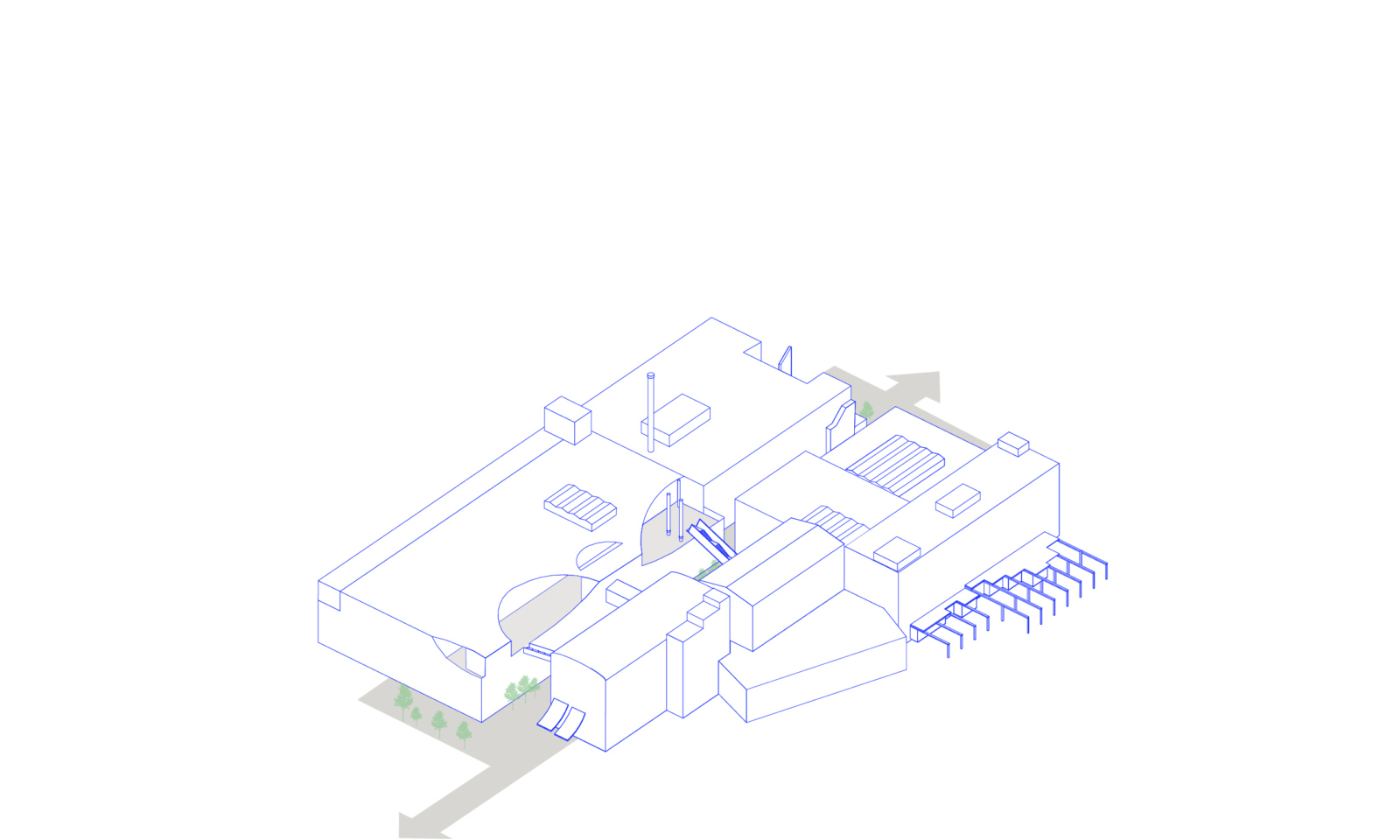
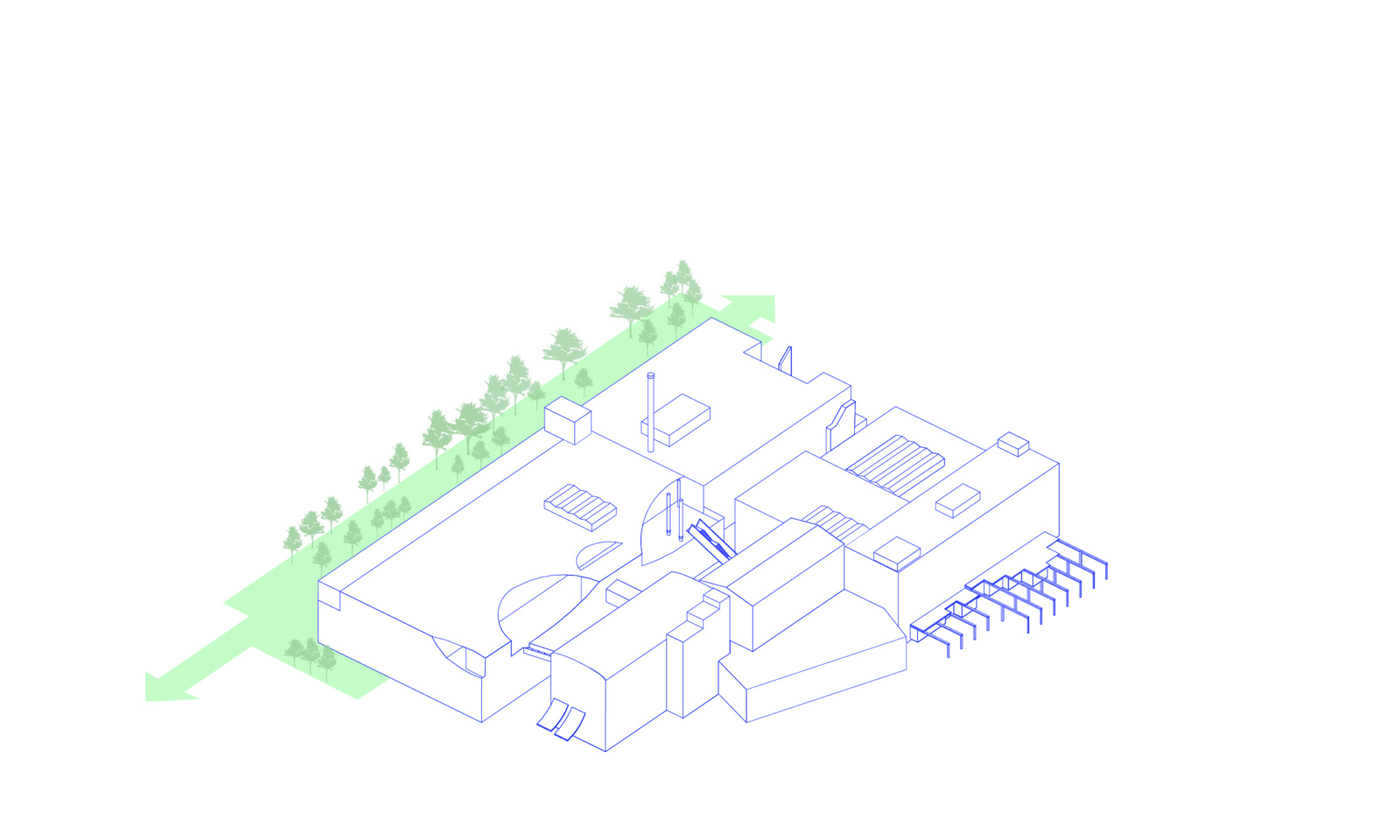
Four public zones define the open space: the Spoorpark, Industriestraat, Buurtstraat and Entreeplein. Together, they form the connective tissue between buildings, programs and surrounding neighbourhoods.
The Spoorpark follows the route of the historic rail line. Rails embedded in the pavement, rain gardens, and informal seating invite both play and pause. Industriestraat, once used for logistics, now hosts pavilions, outdoor seating, and public events — making it the new social artery of the site.
Retaining the fabric.
The design draws directly from the site’s industrial DNA. Rough brick and steel window frames are maintained or reintroduced, structural skeletons are revealed.
Materials from dismantled structures are re-used in place: brick reclaimed from demolitions becomes paving, steel trusses reappear as pergolas, and concrete slabs become seating. The result is a layered environment where the site’s history is not just referenced, yet physically present.
Green roofs on buildings like the Lab Pavillion help cool the environment and purify the air. Rainwater is collected through permeable surfaces and stored underground in buffers and wadis, supporting the landscape year-round.
An existing basement network is repurposed for bicycle parking and infrastructure, leaving the surface open to pedestrians and public life. Cycling routes connect directly to the nearby train station and urban fabric.
A place that grows from use.
From the start, residents, entrepreneurs and future users are involved through test spaces, temporary installations and public events. This helps to shape a place where work and culture, calm and activity, architecture and green spaces come together naturally. Niemeyer will continue to grow in the future through how people use it. Once a place of the past, the factory is becoming a new foundation for the city’s future.
Related content
Oostenburg
The island brings together its industrial heritage with an urban density new to Amsterdam, quality public places to reside and the growth of a community.
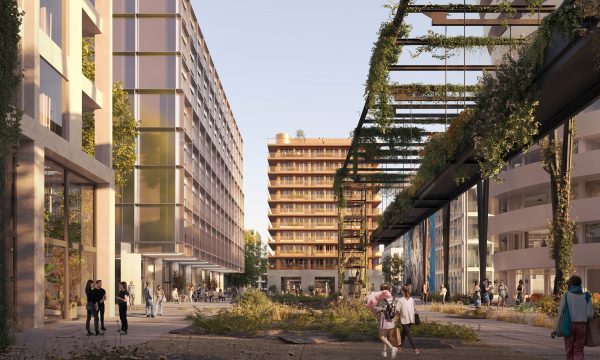
At The Park
Innovation and inspiration meet in At The Park, a new, nature-inclusive urban district on the site of the current Kessler Park in Rijswijk.
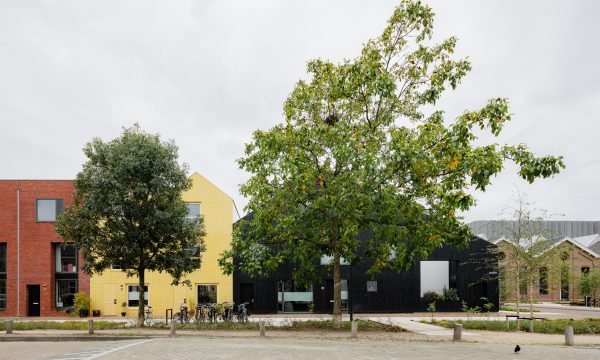
Wisselspoor
A new mixed-use development opens up this disused rail yard in Utrecht to diverse public and collective functions.
↑ Back to top